
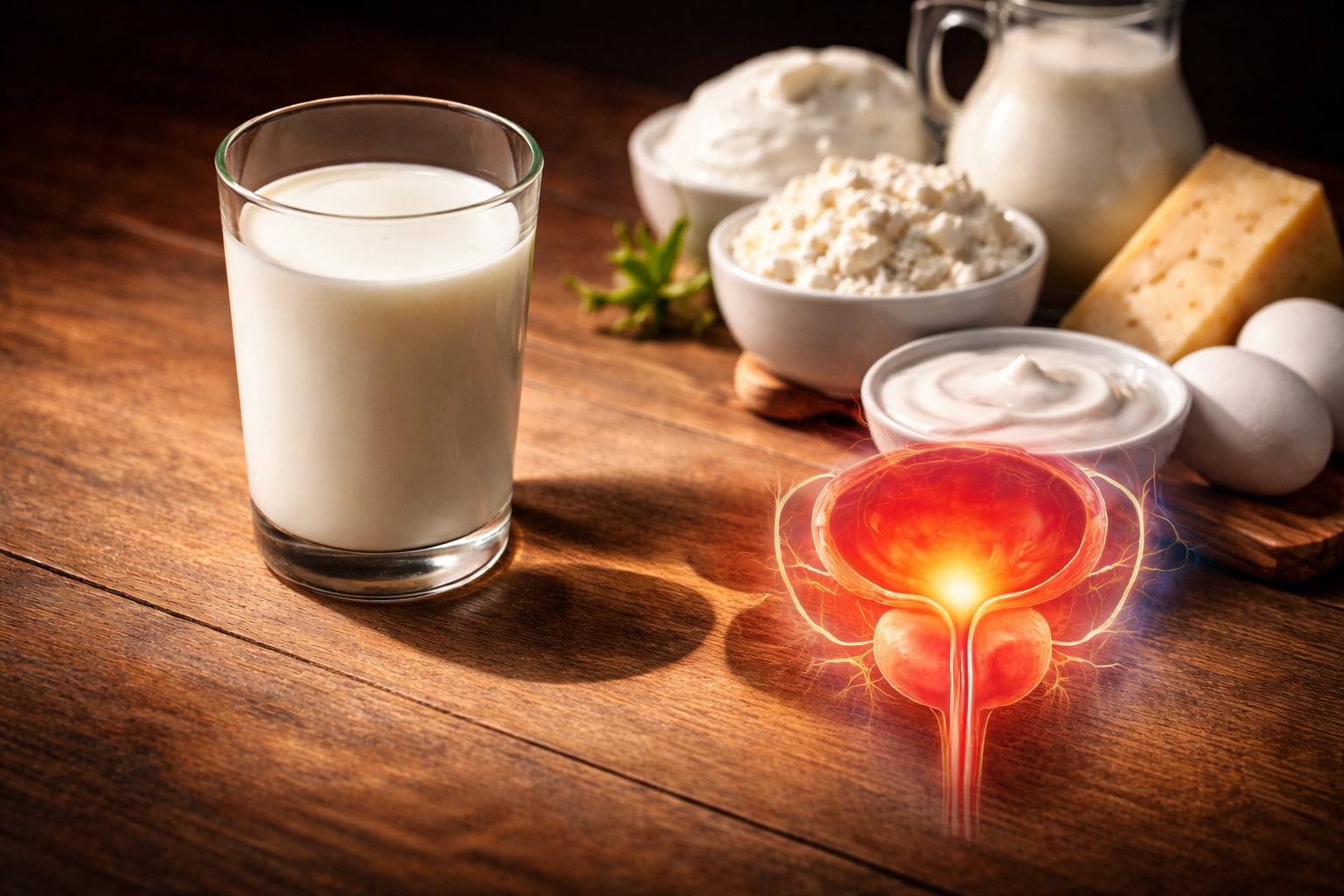
From childhood, we are told that milk “builds strong bones.” It is the staple of breakfast cereal, the base of your protein shake, and a daily habit for billions.
But for men over 40, a growing body of scientific evidence suggests that dairy might be fueling a silent enemy.
You may have heard the rumors: “Dairy causes prostate cancer.” Or maybe you are a gym-goer asking, “Is my Whey Protein shake enlarging my prostate?”
The relationship between dairy and prostate health is complex, controversial, and critical to understand. In this guide, we strip away the marketing hype to look at the raw data regarding milk, cheese, and protein supplements.
The “White Poison” Debate: Does Milk Cause Prostate Cancer?
Let’s get straight to the point. Several major studies, including research published in the American Journal of Clinical Nutrition, have found a correlation between high dairy intake and an increased risk of prostate cancer.
But why? It’s not just the fat. It comes down to two specific components found in cow’s milk:
1. The IGF-1 Factor (The Growth Hormone)
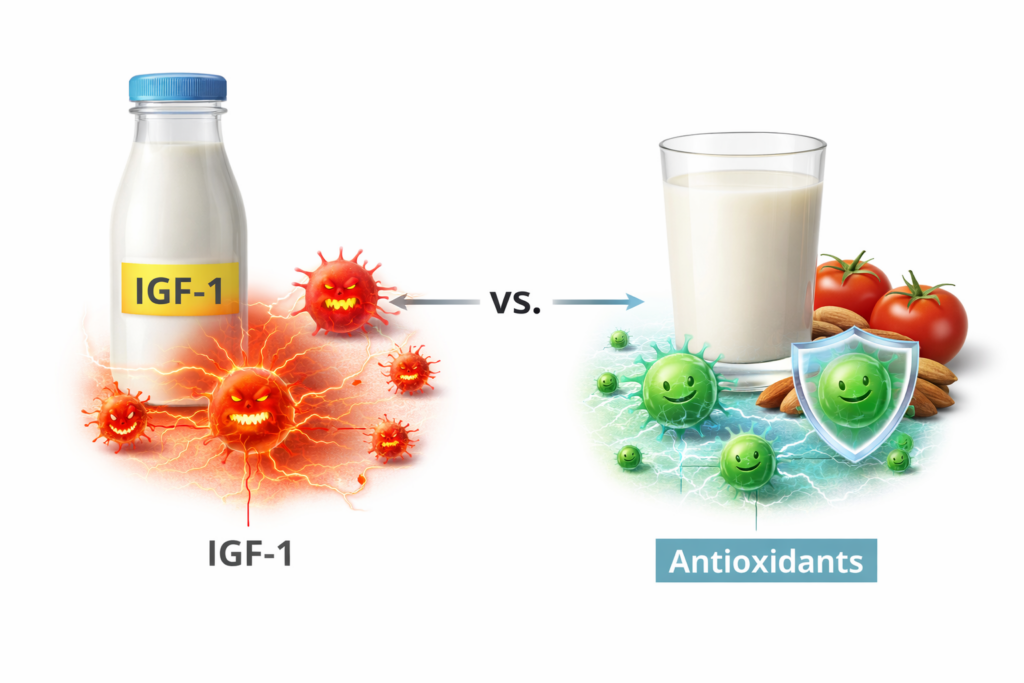
Cow’s milk is designed by nature to turn a 60-pound calf into a 1,500-pound cow rapidly. To do this, it is packed with growth hormones, specifically Insulin-like Growth Factor 1 (IGF-1).
The Problem: IGF-1 promotes cell growth. In an adult man, “cell growth” in the prostate is exactly what you want to avoid. High levels of IGF-1 have been consistently linked to aggressive prostate cancer.
2. The Calcium Overload
While calcium is good for bones, too much of it might be bad for the prostate. Excessive calcium intake suppresses the body’s production of Vitamin D3. Since Vitamin D is a potent cancer-fighter, lowering it leaves your prostate vulnerable.
🛑 The High-Risk List
According to observational studies, men with the highest intake of these foods had a significantly higher risk of advanced prostate cancer:
- Whole Milk
- Processed Cheese
- Heavy Cream & Ice Cream
Whey Protein and Prostate Health: Safe or Not?
This is the #1 question for active men. If you lift weights or ride bikes (see our Cycling Guide), you probably use Whey Protein.
Is Whey Protein bad for your prostate?
The answer is: Proceed with Caution.
Whey is a byproduct of cheese production. It is essentially concentrated dairy. While it is excellent for muscle building, it spikes insulin levels dramatically. Chronically high insulin is a known driver of BPH (Benign Prostatic Hyperplasia) and inflammation.
The Better Alternative: Plant Protein
If you have prostate concerns, consider switching to Pea Protein or Hemp Protein. They provide the same amino acids for muscle growth without the hormonal baggage of dairy.
💡 How to Neutralize the Inflammation
Can’t give up your cheese? If your diet is high in inflammatory foods, you need to balance it with powerful antioxidants. Formulas rich in Beta-Sitosterol can help counteract dietary stress.
👉 See the Solution: ProstaLite Review: The “Anti-Inflammatory” Shield for Your Prostate.
The Best Milk for Prostate Health (Ranked)
If cow’s milk is out, what should you pour on your cereal? Here are the winners and losers regarding dairy and prostate health.
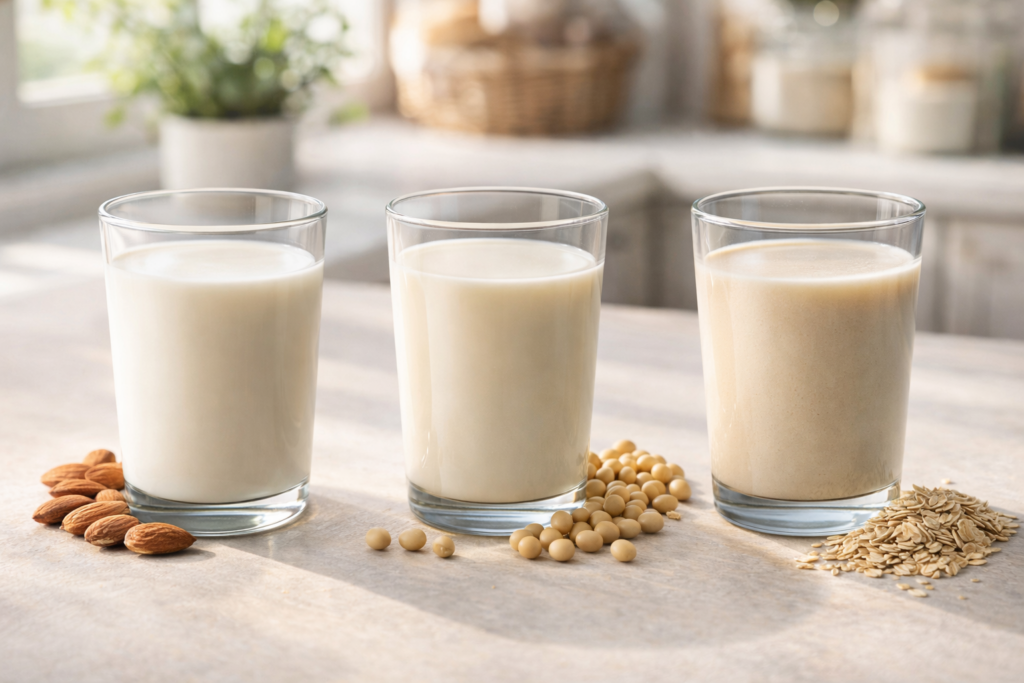
🏆 1. Almond Milk (The Best Choice)
Unsweetened almond milk is low in calories, contains no growth hormones, and is rich in Vitamin E (an antioxidant). It is arguably the safest choice for men with BPH.
🥈 2. Soy Milk (The Cancer Fighter?)
Soy contains isoflavones, specifically Genistein. Some studies suggest that soy consumption may actually lower PSA levels and reduce prostate cancer risk. However, choose organic/non-GMO soy.
🥉 3. Oat Milk
Delicious and creamy, but often high in sugar and carbs. It’s safe for the prostate (no hormones), but watch the calorie count if you are watching your weight.
3 Steps to a Prostate-Friendly Diet
Step 1: The “Calcium Cap”
Don’t eliminate calcium completely, but limit it. Aim for no more than 1,000 mg per day, and try to get it from plant sources like spinach, kale, and almonds rather than dairy.
Step 2: Watch the “Hidden” Dairy
Dairy lurks everywhere: in baked goods, salad dressings, and processed snacks. Read labels. If the first ingredient is “Milk Solids,” put it back.
Step 3: Boost Lycopene Intake
If you eat pizza (cheese), add extra tomato sauce. Lycopene (found in cooked tomatoes) is the most powerful nutrient for neutralizing prostate cancer risk.
Final Verdict: Should You Quit Dairy?
The evidence linking milk and prostate health issues is too strong to ignore. While an occasional slice of pizza won’t kill you, a daily habit of milk and whey protein might be increasing your risk unnecessarily.
Our Recommendation: Try a “Dairy Detox” for 30 days. Switch to almond milk and plant protein. Many men report improved urinary flow and less inflammation within weeks.
Scientific References
- “Dairy products, calcium, and prostate cancer risk” – American Journal of Clinical Nutrition.
- “Whole milk intake is associated with prostate cancer-specific mortality” – American Cancer Society.

“Abdullah is a dedicated health researcher specialized in urological wellness and prostate health. With years of experience in analyzing clinical studies, he provides evidence-based guidance to help men lead healthier lives.”
