
You’ve probably walked past it in the grocery store a hundred times: those strange-looking, spear-like green stalks. Maybe you avoid them because of the taste, or maybe—like millions of men—you avoid them because of the “after-effect” in the bathroom.
But what if I told you that Asparagus is one of nature’s most potent weapons for men’s health?
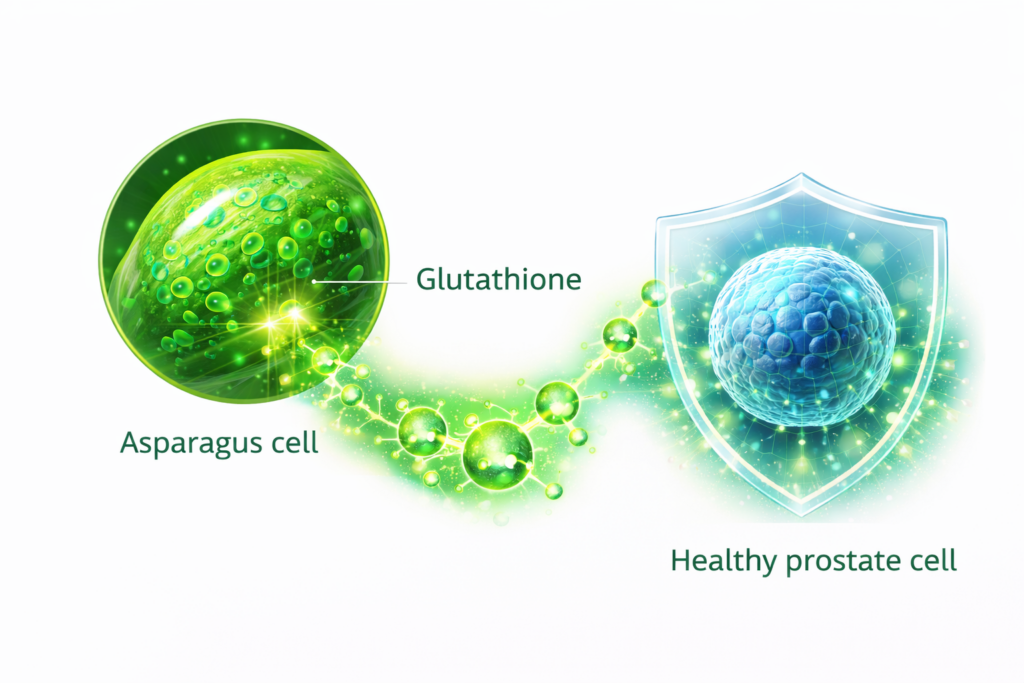
The connection between asparagus and prostate health goes far beyond simple nutrition. Deep inside these green stalks lies a powerful compound called Glutathione, often nicknamed the “Master Antioxidant.”
In this comprehensive guide, we strip away the myths. We won’t just tell you to “eat your veggies.” We will dive deep into the science of how asparagus fights oxidative stress, whether it can prevent prostate cancer, and the truth behind that infamous urine smell.
The “Glutathione” Secret: Why Asparagus is a Prostate Superfood
Most men know about Lycopene (tomatoes) and Zinc (oysters). But very few talk about Glutathione. This is a mistake.
Asparagus is one of the richest dietary sources of glutathione. But why does your prostate care?
What is Glutathione?
Think of your prostate cells as a busy factory. As they work, they produce toxic waste called “free radicals.” If left unchecked, this waste causes inflammation (Prostatitis) and DNA damage.
Glutathione is the “cleaning crew.” It neutralizes these free radicals instantly, acting as a shield against cellular aging.
The Research
A study published in the Journal of Nutrition found that high levels of glutathione are critical for protecting cells from DNA damage. Since prostate issues often start with inflammation, maintaining high antioxidant levels is a proactive strategy. Unlike inflammatory foods like dairy, asparagus works to calm the system down.
Asparagus and Prostate Cancer: Myth vs. Reality
If you search online, you might find confusing headlines. Some claim asparagus cures cancer; others say it causes it. Let’s set the record straight for 2026.
The “Spread” Myth
A few years ago, a study on mice suggested that a compound called “Asparagine” might help breast cancer spread. Panic ensued.
The Truth: This study was not about prostate cancer, and it was in mice, not men. Leading organizations like the American Institute for Cancer Research (AICR) have clarified that there is no evidence that eating asparagus increases cancer risk in humans. In fact, the fiber and antioxidants in asparagus likely reduce risk.
⚠️ Important: Diet is Good, But is it Enough?
Eating asparagus provides excellent antioxidants, but let’s be honest: You can’t eat 5 pounds of asparagus every day.
If you are already waking up 3-4 times a night to pee, or feeling that nagging pressure, food alone might not solve the problem fast enough. You likely need a concentrated solution to shrink the inflammation.
👉 Click Here to See the #1 Rated Natural Method to Shrink Swollen Prostate (2026 Review)
The “Smell” Test: Is Something Wrong with My Prostate?
This is the question every man is too embarrassed to ask.
“I ate asparagus, and now my urine smells terrible. Is it an infection? Is it my prostate?”
The Answer: Relax. It’s healthy.
Asparagus contains a unique compound called Asparagusic Acid. When your body digests it, it breaks it down into sulfur-containing byproducts. When you urinate, these sulfur compounds evaporate instantly, creating that distinct, pungent odor.
Furthermore, asparagus acts as a natural diuretic. Just like the effect of caffeine, it encourages your kidneys to flush out excess fluid and toxins. This frequent urination is actually a sign that your system is cleansing itself, not a symptom of BPH.
How to Cook Asparagus for Maximum Potency
Boiling asparagus to death destroys the Glutathione. To get the prostate benefits, you need to cook it gently.
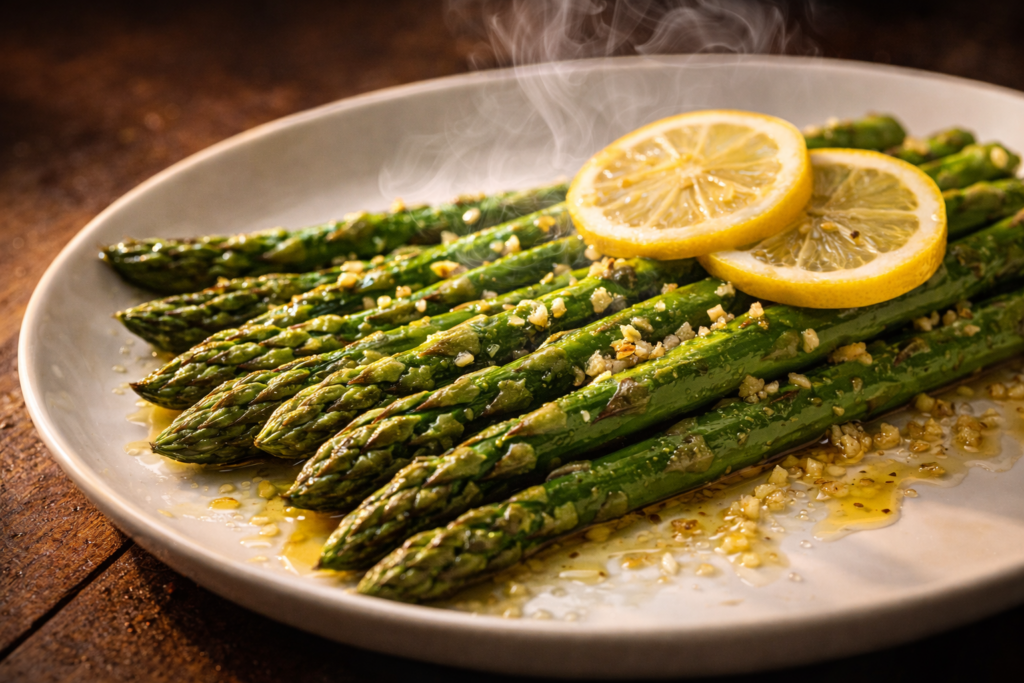
The “Prostate-Power” Recipe: Roasted Garlic Asparagus
We combine Asparagus (Glutathione) with Garlic (Allicin) and Olive Oil (Healthy Fats) for a triple-threat meal.
Ingredients:
- 1 bunch fresh asparagus (woody ends snapped off)
- 3 cloves garlic, minced
- 2 tbsp Extra Virgin Olive Oil
- Lemon juice
Instructions:
- Preheat oven to 400°F (200°C).
- Toss the spears in olive oil and garlic.
- Roast for just 10-12 minutes. They should be tender but still crisp (bright green).
- Squeeze fresh lemon juice on top before serving.
Final Verdict: Should Men Eat Asparagus?
Absolutely. When looking at the link between asparagus and prostate health, the pros heavily outweigh the cons (which are nonexistent, aside from the smell).
It acts as a natural diuretic to flush your system, provides critical DNA-protecting antioxidants, and supports healthy testosterone levels via Vitamin E.
Our Advice: Aim for 2 servings a week. Your urine might smell funny, but your prostate will thank you.
Scientific References
- “Glutathione metabolism and its role in prostate cancer” – National Institutes of Health (NIH).
- “Asparagus consumption and cancer risk: A systematic review” – American Institute for Cancer Research (AICR).
- “Folate intake and prostate cancer risk: A meta-analysis” – World Cancer Research Fund.

“Abdullah is a dedicated health researcher specialized in urological wellness and prostate health. With years of experience in analyzing clinical studies, he provides evidence-based guidance to help men lead healthier lives.”
