
It’s 3:00 AM. The house is silent, but you are wide awake, standing in the bathroom, waiting for a stream that refuses to start.
If you are reading this, you know the frustration of Benign Prostatic Hyperplasia (BPH). You know the urgency, the dribbling, and the exhaustion. You may have tried medications with harsh side effects, or perhaps you are already exploring natural options like Yoga.
But what if there was a way to signal your bladder to relax using nothing but your own hands?
This is the promise of Acupressure for prostate health.
While Western medicine treats the prostate as an isolated gland, Traditional Chinese Medicine (TCM) views it as part of a river system. When the river is blocked (“Stagnation”), the prostate swells. Acupressure prostate therapy is the art of removing those blocks.
In this definitive 2026 guide, we are going to bypass the internet gimmicks. We will teach you the exact location of the 6 most powerful reflexology points, the science behind them, and give you a 15-minute nightly routine to reclaim your sleep.
Is It Magic or Science? How Acupressure Works
Skeptics often dismiss acupressure as “placebo.” However, modern neuroscience offers a compelling explanation for why acupressure for prostate enlargement actually works.
The Bio-Electrical Connection:
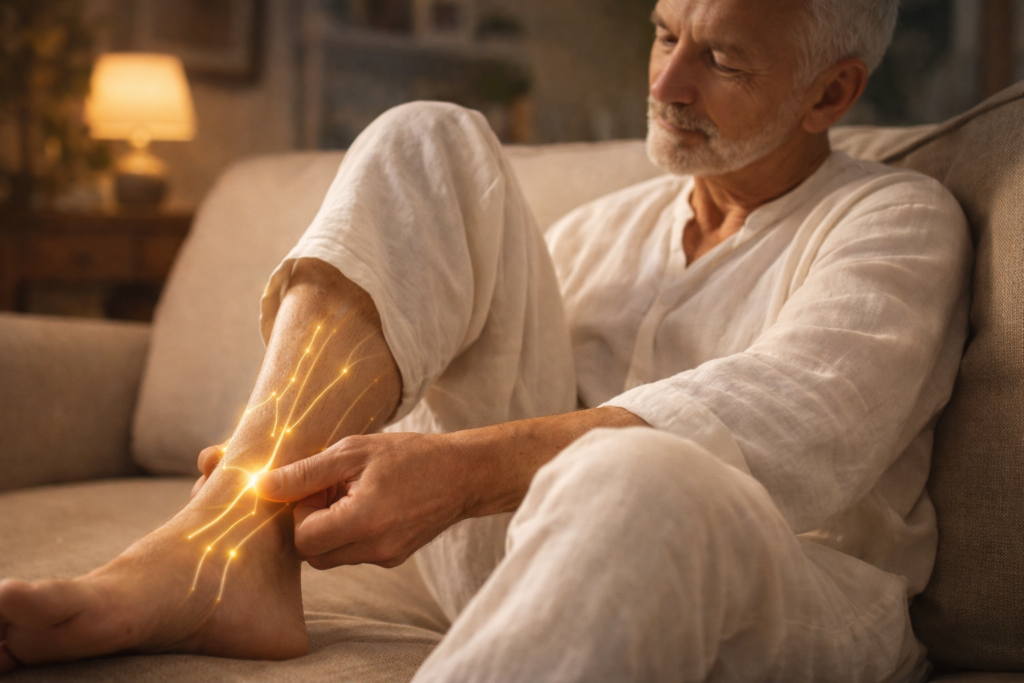
Your body is a network of nerves. The points used in TCM usually lie directly over major nerve bundles. When you stimulate these points (like SP6 on the ankle), you send a signal up the tibial nerve to the sacral plexus—the exact same nerve center that controls the bladder and prostate.
The “Damp Heat” Theory:
In Chinese terms, BPH is often caused by “Damp Heat” in the Lower Burner. Think of it like a swamp in your pelvis. Stagnant blood and fluids accumulate, causing swelling. Acupressure acts like opening a sluice gate, allowing fresh blood to flush the area and reduce inflammation.
Mapping the Terrain: The 6 “Golden Points”
Forget the vague advice you see on social media. These are the specific, clinically recognized points used by acupuncturists for urological disorders.
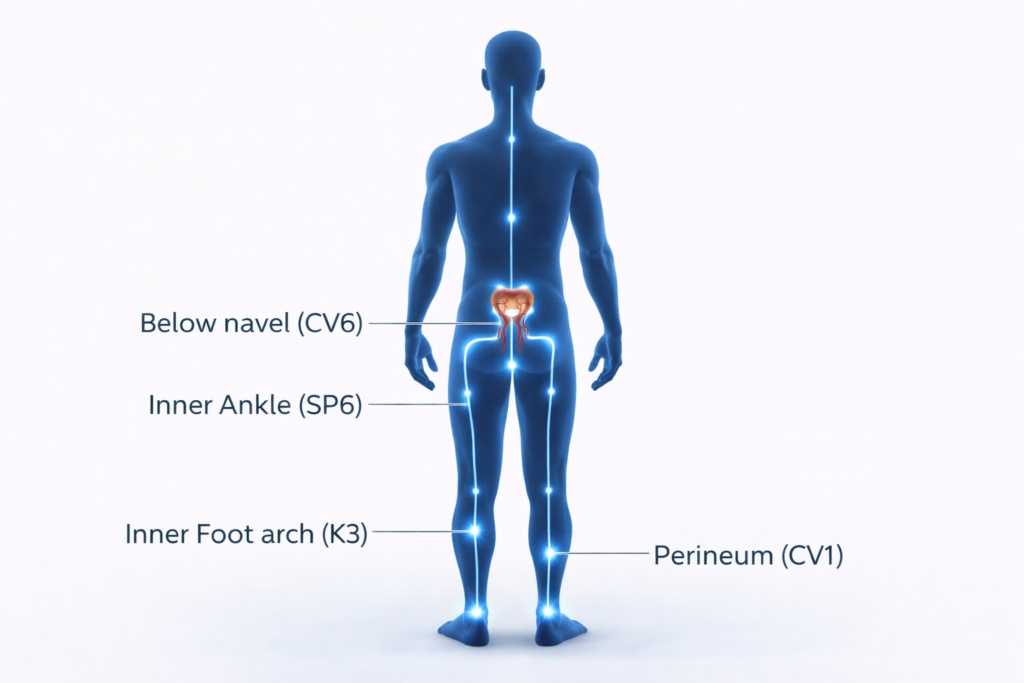
1. Sanyinjiao (SP6) – The Three Yin Intersection
If you only use one point, make it this one. It is the meeting place of the Liver, Kidney, and Spleen meridians.
- Location: On the inside of your lower leg. Place 4 fingers above your inner ankle bone. The point is just behind the shin bone.
- How to Press: Apply deep, steady pressure with your thumb. It might feel tender—that’s a sign it’s working.
- Benefit: Improves urine flow and reduces pelvic pain.
2. Qihai (CV6) – The Sea of Qi
This point is essential for men suffering from a “weak stream” or dribbling.
- Location: Exactly 1.5 inches (about two finger widths) directly below your belly button.
- How to Press: Lie down. Use your index and middle fingers to press gently but deeply inward. Breathe slowly.
- Benefit: Strengthens the bladder muscles and boosts general vitality.
3. Taixi (K3) – Great Stream
In TCM, the Kidneys rule the reproductive system. Weak kidneys equal a weak prostate.
- Location: In the hollow depression between the tip of your inner ankle bone and your Achilles tendon.
- How to Press: Pinch the area or rub in circles.
- Benefit: Reduces nighttime urination (Nocturia) and warms the body.
4. Huiyin (CV1) – The Meeting of Yin
This is the most direct point but requires privacy.
- Location: The perineum—the soft spot midway between the scrotum and the anus.
- How to Press: Gentle massage during a shower or while lying down.
- Benefit: Directly stimulates blood flow to the prostate gland itself.
5. Yinlingquan (SP9) – Yin Mound Spring
This point is specifically used to drain “Dampness” (fluid retention).
- Location: On the inner leg, just below the knee. Follow the bone up until your finger falls into a depression.
- Benefit: Helps with the feeling of “incomplete emptying” of the bladder.
6. Yongquan (K1) – Gushing Spring
A grounding point to calm the nervous system before sleep.
- Location: On the sole of the foot, in the depression when you curl your toes.
- Benefit: Reduces anxiety-induced urgency.
Debunking the “Prostate Care Point Clip”
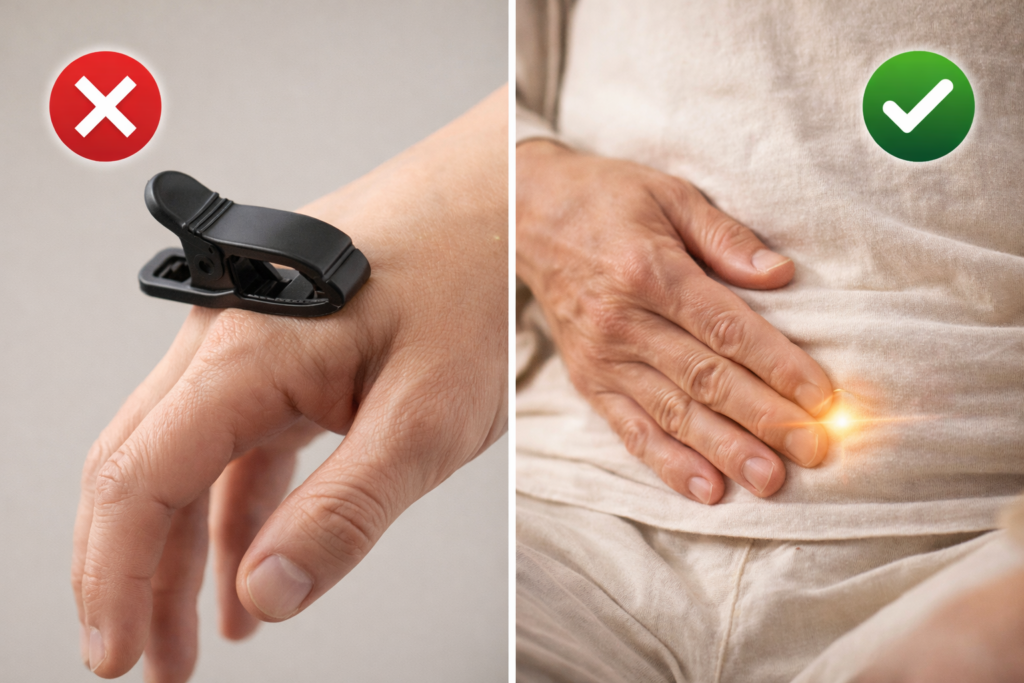
If you have searched for acupressure prostate tools, you have likely seen ads for “Prostate Care Clips” that attach to the web of your hand (the LI4 point).
Here is the honest truth:
While the LI4 point (He Gu) on the hand is excellent for headaches and general pain, it is NOT the primary point for prostate health. These clips are largely a marketing gimmick designed to sell cheap plastic.
Why Manual is Better:
Your hands can adjust pressure. Your hands can feel the “Qi” or tenderness. A plastic clip simply pinches the skin. Do not waste your money on shortcuts; invest time in learning the real points on your legs and abdomen (SP6 and CV6) which have a direct nerve connection to the pelvis.
Your 15-Minute “Flow Restoration” Routine
Consistency is key. You can’t do this once and expect a miracle. Perform this routine every night before bed for 30 days.
- Warm Up: Rub your hands together until hot. Place them over your lower back (kidneys) for 1 minute.
- The Belly Press (CV6): Lie on your back. Press the point below your navel for 2 minutes while deep breathing.
- The Ankle Massage (SP6 & K3): Cross one leg over the other. Massage the inner ankle points for 3 minutes on each leg.
- The Foot Finish (K1): Press the center of your foot sole firmly for 1 minute to ground your energy.
⚠️ The Limitation of Mechanical Fixes
Acupressure is an incredible tool. It’s like using a plunger to unclog a pipe—it gets things moving.
But ask yourself this: Why is the pipe clogging in the first place?
If your prostate is actively growing due to hormonal imbalance (DHT) or chronic inflammation, manual pressure alone can only provide temporary relief. You are treating the symptom, not the source.
The 2026 Protocol for Complete Recovery:
Smart men use a “Pincer Attack”:
- From the Outside: Use Acupressure to relax the muscles and nerves.
- From the Inside: Use a clinical-grade complex like ProstaLite to shrink the inflamed tissue and block DHT.
👉 Don’t Just Massage It, Fix It: See the ProstaLite Solution
Watch: Expert Demonstration of Points
Finding the exact spot can be tricky for beginners. Watch this detailed walkthrough to ensure you are hitting the right meridians.
Amplifying the Effect: The “Jing” Diet
In Chinese medicine, “Jing” is your vital essence. You lose it as you age. To rebuild it, acupressure must be combined with potent nutrition.
- Zinc: The most critical mineral for prostate health. (Stay tuned for our upcoming guide on Zinc).
- Seeds: Pumpkin seeds are famous for nourishing Kidney Yang.
- Avoid Cold: Stop drinking ice water. It “freezes” the pelvic circulation. Switch to warm herbal teas.
Frequently Asked Questions
Does acupressure for prostate really work?
Yes. Several studies indicate that stimulating points like SP6 can improve QoL (Quality of Life) scores in BPH patients by regulating nervous system signals to the bladder.
Are there side effects to prostate acupressure?
It is very safe. The only common “side effect” is mild tenderness at the pressure point, which indicates released tension. However, avoid deep pressure on the abdomen (CV6) if you have recently had surgery.
Can I use a massage gun instead of fingers?
For leg points (SP6), a massage gun on low setting is fine. However, for abdominal points (CV6) or the perineum (CV1), always use manual finger pressure to avoid injury.
Final Thoughts: Reclaiming Your Flow
Acupressure prostate therapy is not a quick fix; it is a lifestyle. It connects you back to your body and gives you a tool to manage symptoms without a prescription pad.
Tonight, before you drift off to sleep, take 5 minutes. Press the points. Breathe. Signal to your body that it is safe to relax. You might just find yourself sleeping through the night for the first time in years.
Scientific & Historical References
- “The Effects of Acupressure on Dysuria and Post-void Residual Urine” – Journal of Health Providers.
- “Acupuncture Points For Prostatitis Relief: Clinical Confirmation” – Healthcare Medicine Institute.
- “Traditional Chinese Medicine approaches to BPH” – PubMed Central.

“Abdullah is a dedicated health researcher specialized in urological wellness and prostate health. With years of experience in analyzing clinical studies, he provides evidence-based guidance to help men lead healthier lives.”
