
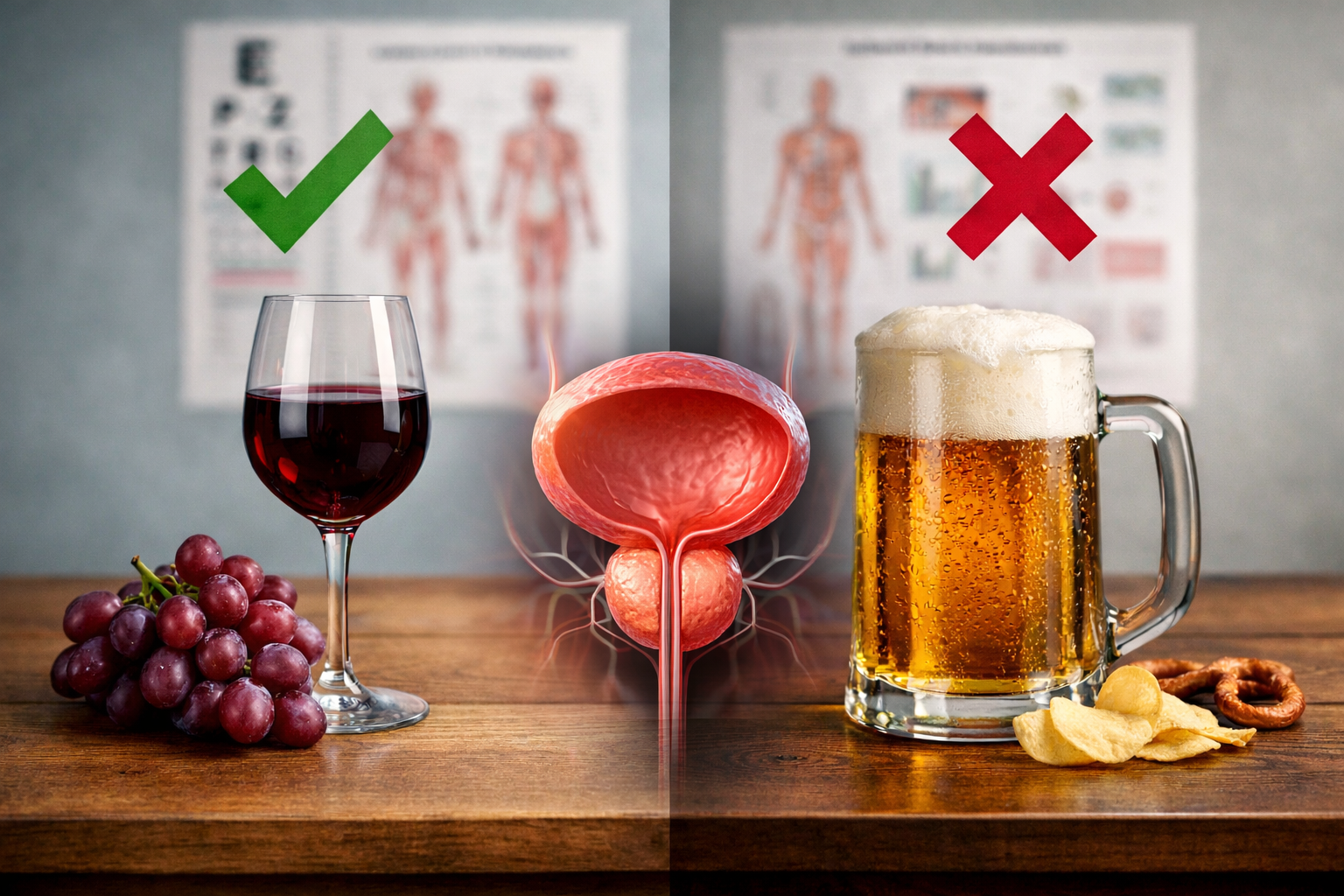
If you enjoy a cold beer or a glass of wine with dinner, but struggle with prostate issues, you have probably asked yourself: Is alcohol helping or hurting?
The relationship between alcohol and prostate health is one of the most confusing topics for men. Some studies claim red wine prevents cancer, while others say alcohol worsens BPH symptoms.
So, what is the truth?
In this comprehensive guide, we analyze the medical facts. We will break down the effects of beer, wine, and whiskey, answer whether alcohol affects PSA levels, and give you the final verdict.
How Alcohol Affects an Enlarged Prostate (The Mechanism)
Before looking at specific drinks, you must understand what alcohol does to your bladder and prostate gland.
Alcohol is a diuretic. This means it forces your kidneys to produce more urine than usual. For a man with an enlarged prostate (BPH) who already struggles with frequent urination, this is a recipe for disaster.
Furthermore, alcohol can increase inflammation. It relaxes the muscles around the bladder neck, making it harder to “push” urine out, leading to that frustrating feeling of incomplete emptying.
The Breakdown: Beer, Wine, or Whiskey?
Not all drinks are created equal. Let’s answer the most common questions regarding specific types of alcohol.
1. Is Red Wine Good for Prostate? 🍷
This is the “bright spot” in the research. Studies suggest that moderate consumption of red wine may actually be beneficial.
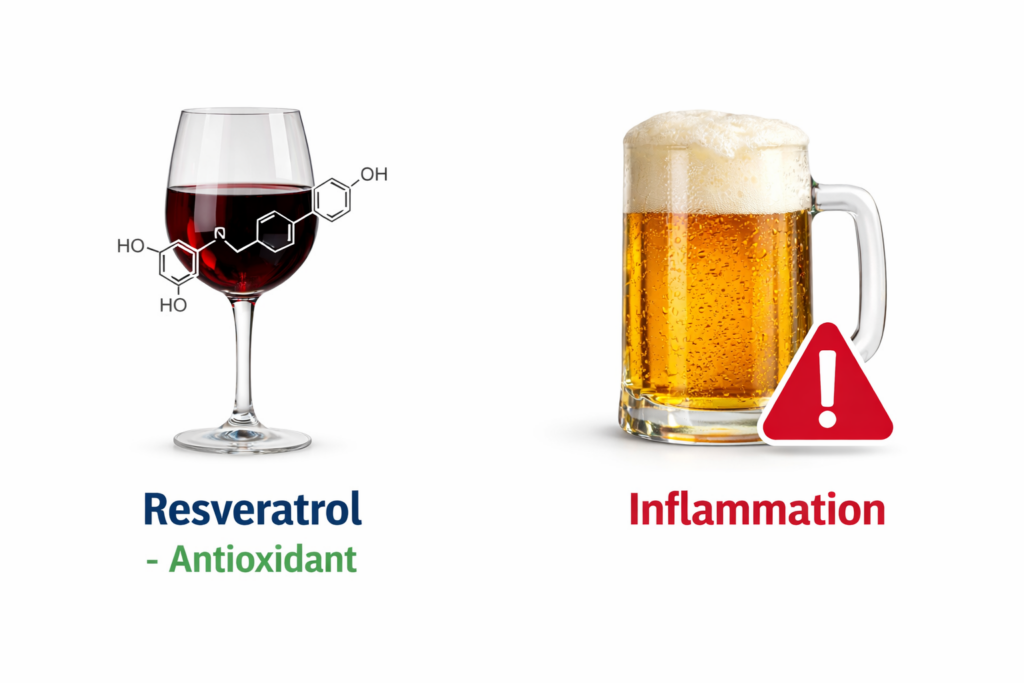
The Reason: Red wine contains a powerful antioxidant called Resveratrol (found in grape skins). Some research indicates that resveratrol may dampen prostate cancer cell growth and reduce inflammation. However, moderation is key—one glass is medicine; the whole bottle is poison.
2. Is Beer Good for Prostate? 🍺
Unfortunately, the answer is generally no. Beer is often considered the worst option for men with BPH.
The Reason: Besides the alcohol, beer contains yeast and hops, which can increase prolactin levels in the body. High prolactin is linked to prostate enlargement. Plus, the high volume of fluid in a pint of beer puts immediate pressure on the bladder.
3. Is Whisky Good for Prostate? 🥃
Hard liquors like whiskey, vodka, or gin have a different problem: Concentration.
While they don’t have the yeast of beer, the high alcohol content (40%+) is a strong irritant to the bladder lining. If you drink whiskey, it is crucial to drink a glass of water alongside it to dilute the inflammatory effect.
Does Alcohol Affect PSA Level?
This is a critical question for men undergoing screening. Does a night of drinking spike your PSA?
The Medical Reality: Alcohol itself does not directly cause a permanent rise in PSA levels (Prostate-Specific Antigen). However, there is a catch.
If drinking alcohol causes your prostate to become inflamed or irritated (Prostatitis), that inflammation CAN cause a temporary spike in PSA readings. Therefore, doctors often recommend abstaining from alcohol for 48 hours before a PSA blood test to ensure accuracy.
🛑 Warning: Alcohol isn’t the only trigger. Certain foods can ruin your progress. Check our list of the 10 Worst Foods for Prostate Health.
💡 Need to Reduce Nighttime Trips?
If alcohol makes you wake up 5 times a night, your prostate needs support. While cutting back helps, adding clinical-strength ingredients like Beta-Sitosterol can make a huge difference.
👉 Read the solution: ProstaLite Review: How to Sleep Through the Night.
Final Verdict: Can You Drink?
So, regarding alcohol and prostate health, here are the rules to live by:
- Avoid Beer: It is the hardest on your bladder due to volume and yeast.
- Choose Red Wine: In moderation, it offers antioxidant benefits.
- Stop Early: Stop drinking 3 hours before bed to prevent nocturia (nighttime urination).
- Hydrate: For every sip of alcohol, take a sip of water.
Scientific References
This guide is based on findings from:
- “Alcohol consumption and risk of prostate cancer” – National Institutes of Health (NIH).
- “Resveratrol and prostate health” – Harvard Health Publishing.

“Abdullah is a dedicated health researcher specialized in urological wellness and prostate health. With years of experience in analyzing clinical studies, he provides evidence-based guidance to help men lead healthier lives.”
