

For millions of men, cycling is more than just a hobby; it is a passion, a way to stay fit, and a daily escape. But for many, this passion comes with a nagging fear located right between the legs.
You may have heard the rumors: “Cycling causes prostate cancer,” or “Riding ruins your sexual health.”
If you are asking, “Is cycling bad for my prostate?” you are not alone. With conflicting information online, it is hard to separate scientific fact from locker-room fiction.
In this comprehensive medical guide (updated for 2026), we will analyze the relationship between cycling and prostate health. We will tackle the controversial link to cycling and prostate cancer, explain why your doctor might tell you to stop riding before a blood test, and most importantly, show you exactly how to set up your bike to ride pain-free.
Cycling and Prostate Cancer: Is There a Link?
Let’s address the elephant in the room immediately. Does sitting on a bike saddle cause cancer?
The short answer, supported by major urological associations, is NO. There is no conclusive evidence that the physical act of cycling causes prostate cancer.
The Confusion Explained
So, where did this myth come from? A study published by University College London in 2014 grabbed headlines by suggesting a correlation. However, further analysis revealed a crucial detail: Men who cycle frequently tend to be more health-conscious.
Because cyclists visit doctors more often for check-ups, they get screened for prostate cancer more frequently than the general population. This leads to a higher rate of diagnosis, not a higher rate of the disease itself. This is what scientists call “detection bias.”
The Medical Consensus: Cycling improves cardiovascular health, reduces obesity, and lowers systemic inflammation—factors that actually reduce your overall cancer risk.
Warning: Cycling Can Fake a High PSA Test
While cycling doesn’t cause cancer, it DOES affect how we test for it. This is the most critical information for any man over 50.
The Prostate-Specific Antigen (PSA) test measures a protein produced by the prostate. High levels can indicate cancer, infection, or BPH.
Why Cycling Spikes PSA
When you ride, the saddle applies direct, sustained pressure to the perineum (the area between the scrotum and anus). This pressure essentially “massages” the prostate gland internally. This stimulation forces more PSA into the bloodstream.
The Consequence: If you ride 50 miles on Saturday and take a blood test on Sunday, your PSA might be falsely elevated. This could lead to unnecessary panic, biopsies, and medical procedures.
🛑 The “48-Hour Rule”
Urologists strongly recommend that you stop cycling for at least 48 hours before a PSA blood test. This allows your prostate to “calm down” and ensures your test results are accurate.
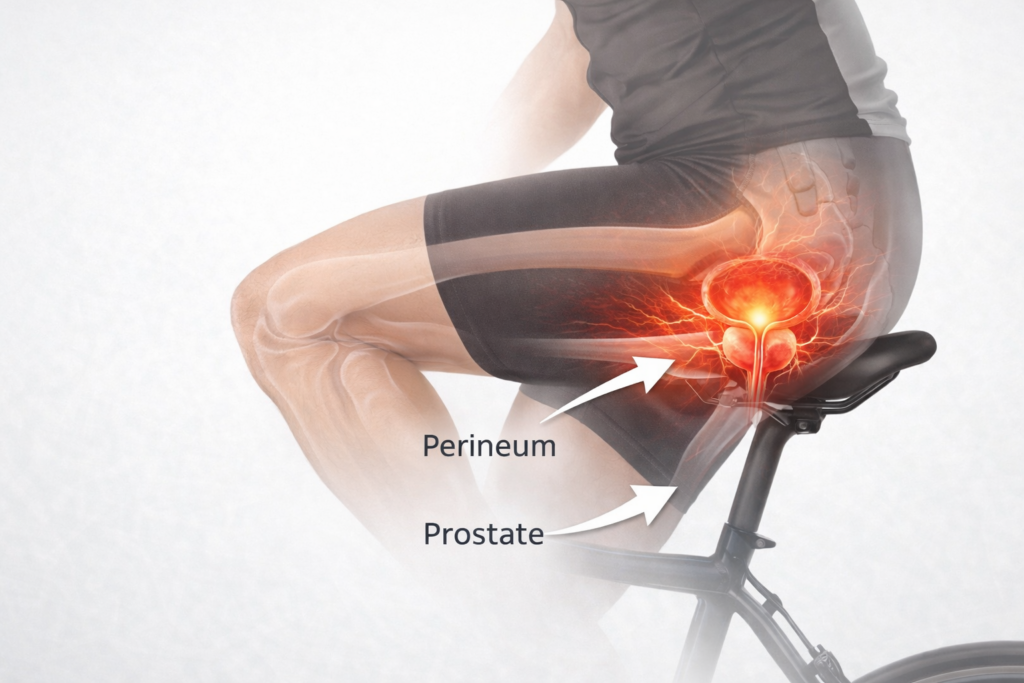
Cycling and BPH: The Real Discomfort
If cancer isn’t the main worry, what is? For most older cyclists, the issue is Benign Prostatic Hyperplasia (BPH) or an enlarged prostate.
When the prostate is enlarged, the urethra (urine tube) is already squeezed. Sitting on a traditional saddle adds external compression to this already tight area. This can lead to:
- Numbness: In the genital area (penile numbness).
- Urinary Urgency: Feeling like you need to pee immediately after riding.
- Pain: Soreness in the perineum that lasts for hours.
However, having BPH does not mean you have to quit cycling. It means you need to change your gear.
The Best Prostate Cycling Saddle: How to Choose
Your choice of saddle (seat) makes the difference between torture and pleasure. If you care about cycling and prostate health, throw away the narrow racing seat that came with your bike.
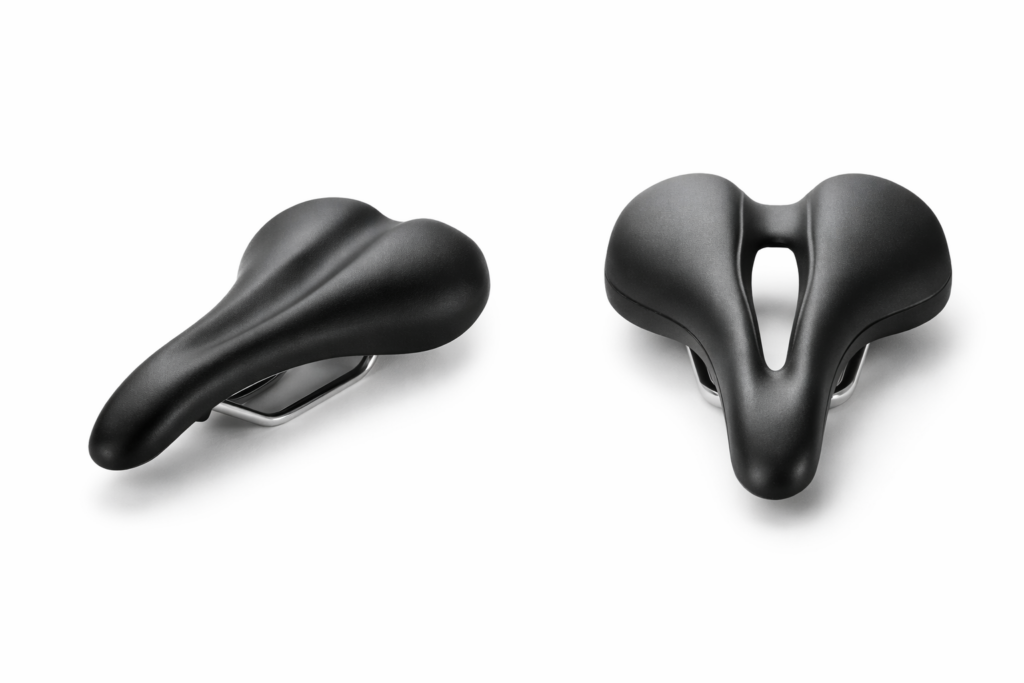
1. The Cut-Out Saddle (Relief Channel)
These saddles have a hole or a deep groove in the middle.
How it works: By removing the material in the center, you remove the pressure on the perineum. Your weight is supported by your “sit bones” (ischial tuberosities) rather than your soft tissue.
2. The Noseless Saddle
These look strange, as they lack the front “nose” of the seat.
How it works: Without a nose, there is zero pressure on the perineal nerves and arteries. This is the gold standard for men recovering from prostate surgery or suffering from severe ED.
3. Gel vs. Foam Padding
Softer isn’t always better. Too much soft gel can “bunch up” and pinch sensitive areas. Look for firm foam that supports your bones, rather than a soft cushion that you sink into.
💡 Protection from the Inside Out
A good saddle protects you externally, but what about internal inflammation? Many cyclists use natural supplements to reduce prostate swelling, making long rides more comfortable.
👉 Cyclist’s Choice: ProstaLite.
3 Adjustments to Save Your Prostate
Even the best saddle won’t help if your bike fit is wrong. Follow these rules:
1. Check Your Saddle Angle
If your saddle nose points up, it acts like a spear driving into your prostate. Keep the saddle level, or tilt the nose down slightly (1-2 degrees) to relieve frontal pressure.
2. Handlebar Height
The lower your handlebars, the more you rotate your pelvis forward, grinding your soft tissue against the seat. Raising your handlebars slightly shifts your weight back onto your sit bones.
3. The “Stand Up” Rule
Make it a habit to stand up on your pedals for 30 seconds every 15 minutes. This allows blood to flow back into the perineal area and prevents numbness.
Bike Riding After Prostate Cancer Surgery
For survivors, the question is: “Can I ever ride again?”
Yes, but patience is key. After a radical prostatectomy, the pelvic floor is weak. Most urologists recommend waiting 6 to 12 weeks before getting back on a bike. When you do return, a noseless saddle is almost mandatory to prevent scar tissue irritation.
Final Verdict
So, regarding cycling and prostate cancer, the news is good: riding does not cause the disease. In fact, the cardiovascular benefits outweigh the risks.
However, to ensure cycling and prostate health coexist happily:
- Invest in a saddle with a cut-out.
- Stop riding 48 hours before a PSA test.
- Listen to your body—numbness is a warning sign, not a badge of honor.
Medical Sources
Based on clinical guidelines from:
- “Cycling and Men’s Health” – Harvard Medical School.
- “The effect of cycling on PSA levels” – Journal of Urology.

“Abdullah is a dedicated health researcher specialized in urological wellness and prostate health. With years of experience in analyzing clinical studies, he provides evidence-based guidance to help men lead healthier lives.”
