
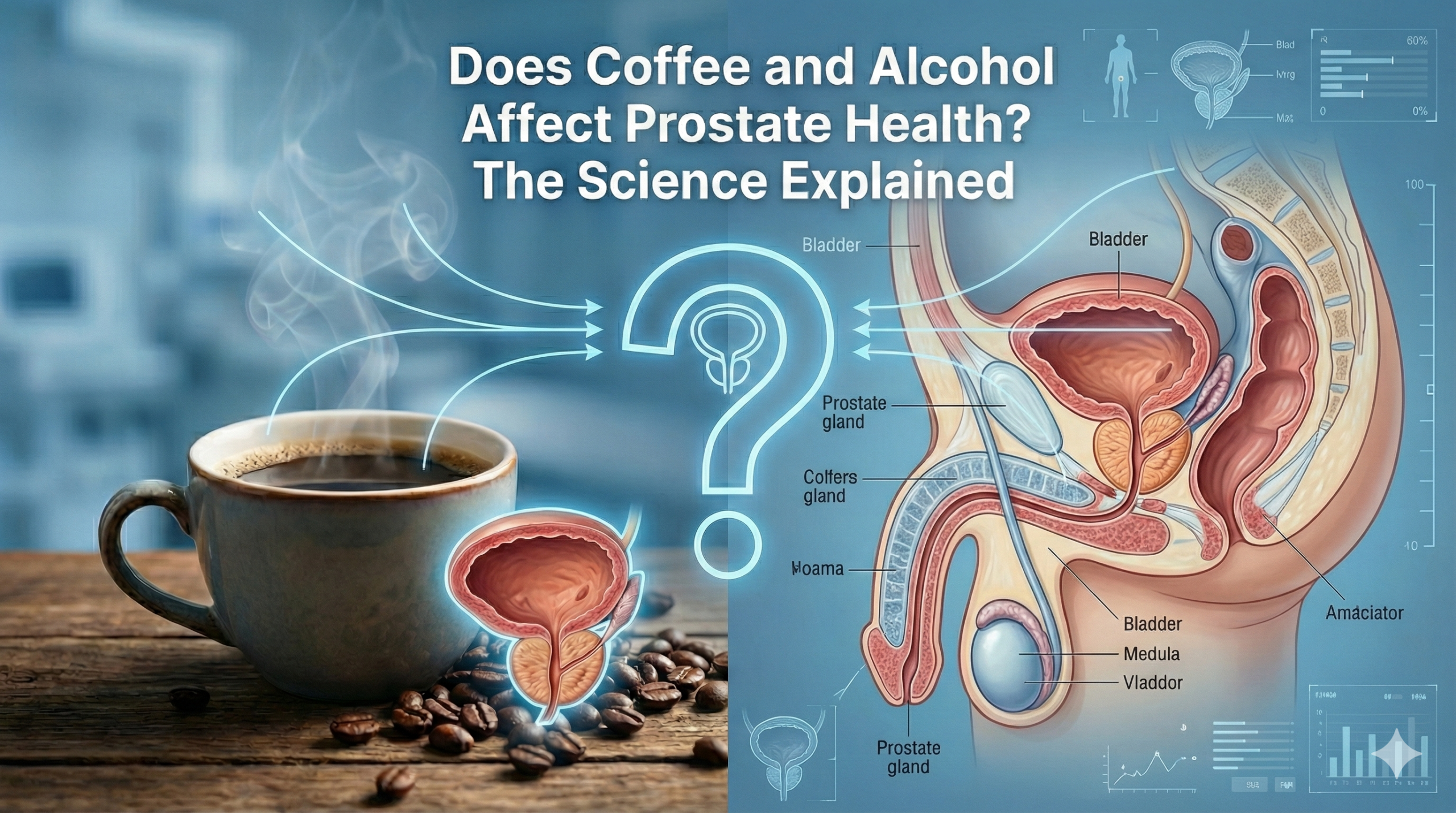
Surprising fact: nearly one in three men report nightly trips to the bathroom, yet few know how common beverages might play a role.
This opening looks at two linked but different worries: long-term diagnoses such as benign enlargement or cancer versus short-term urinary bother like urgency and nocturia.
Researchers study caffeine, coffee use, and alcohol intake in many ways. Some papers measure cups per day, others look at grams of caffeine or drinking patterns. That mix helps explain why headlines seem to conflict: one study tracks diagnosis risk over years, another notes immediate bladder irritation.
This article is an evidence-based guide. It will explain how scientists measure exposure, what associations can and cannot prove, and why individual sensitivity, dose, and timing matter more than blanket rules.
If someone sees blood in urine, fever, severe pain, or rapidly worse symptoms, they should seek medical advice promptly. The rest of the piece will summarize evidence, likely mechanisms such as bladder irritation and nocturia, and practical moderation tips.
Key Takeaways
- Short-term bladder irritation can follow stimulant or alcohol use, even when long-term risk stays unclear.
- Studies differ: some assess diagnosis risk; others report symptom changes after intake.
- Individual sensitivity, dose, and timing shape effects more than universal limits.
- Moderation and symptom tracking help guide personal choices.
- Serious or sudden urinary changes require prompt clinical evaluation.
What “Prostate Health” Means in Research and Real Life
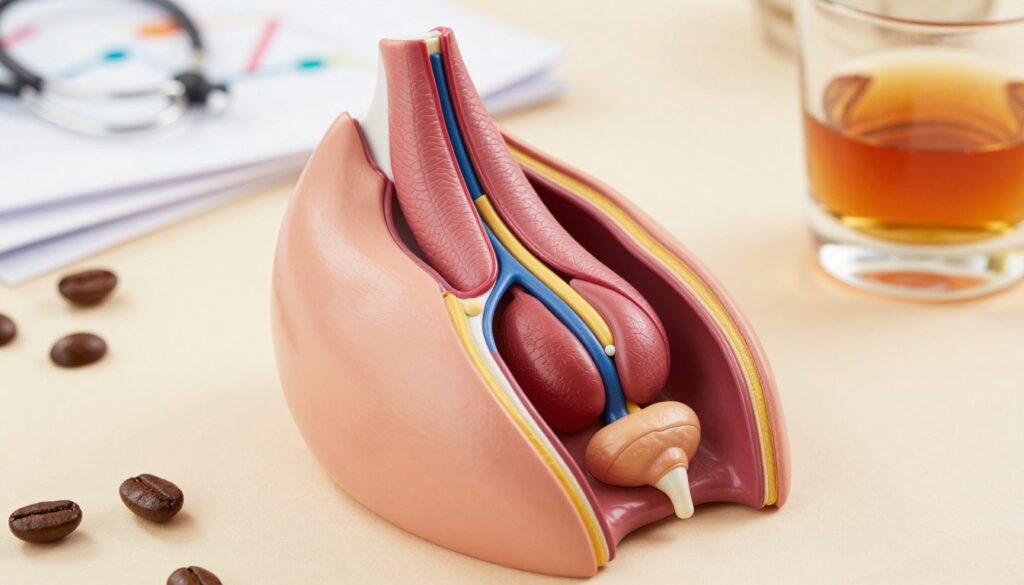
What researchers count as a ‘prostate’ problem often differs from what men feel at home. Clinical work and population studies use distinct endpoints, so it’s important to know which outcome a paper measures before applying it to daily choices.
Benign prostatic hyperplasia versus everyday symptoms
Benign prostatic hyperplasia is a non‑cancerous enlargement of the prostate gland, often described as prostatic hyperplasia or benign prostatic enlargement in medical writing.
BPH commonly appears in the transition zone and may lead to bph‑related obstruction. However, size does not always match how a man feels.
Long-term risk versus daily comfort
Researchers study endpoints like prostate cancer or clinical diagnoses that take years to appear. Other studies record urinary tract symptoms — urgency, frequency, or nocturia — which reflect day‑to‑day comfort.
These are separate questions: an exposure might change tonight’s urgency without changing long‑term diagnosis rates. NHANES-style work often relies on self‑report for diagnosis and dietary recall for intake, which affects interpretation.
Why age, metabolism, and conditions matter
Age is the dominant driver of enlargement and bph incidence. Comorbid conditions such as obesity, diabetes, and hypertension also shift observed associations in population research.
Individual metabolism, including caffeine metabolism and baseline inflammation levels, alters symptom sensitivity after the same intake. That helps explain varied responses and why readers should view evidence through both “risk over years” and “symptoms tonight.”
Long-Term Prostate Risk vs Short-Term Urinary Symptoms: The Key Distinction

Long-term outcomes are clinical endpoints measured over years. Examples include a formal diagnosis of benign prostatic hyperplasia, documented gland enlargement, or rates of prostate cancer. These changes follow slow biological processes linked to age and other lasting factors.
Long-term outcomes studied in research
Researchers track diagnosis, imaging, or cancer incidence in cohorts. Such endpoints reflect tissue growth or disease progression and rarely shift after a single exposure or short period of altered intake.
Short-term outcomes people feel
By contrast, short-term signs include urgency, frequency, weak stream, and nocturia. These urinary symptoms stem from bladder behavior, urine volume changes, and sleep disruption rather than immediate gland size changes.
Why a trigger can worsen symptoms without “causing” enlargement
Stimulants like caffeine or diuretics can increase urine production and irritate the bladder lining. That can raise nighttime trips and urge without altering prostatic tissue.
Important note: new blood in urine, severe pain, fever, or rapid progression may indicate conditions beyond benign prostatic processes and should prompt medical evaluation.
- Mental model: think “risk over years” versus “symptoms tonight.”
- Population studies try to adjust for confounders but cannot always prove causation.
- Symptom flares do not automatically mean tissue growth; improvements after reduced intake do not prove the opposite.
Does Coffee and Alcohol Affect Prostate Health? The Science Explained
Population studies mostly report statistical links between reported beverage intake and later clinical or symptom outcomes. They show patterns, not proof that a drink caused a tissue change.
What observational research can show: associations between habitual stimulant use and outcomes such as bph, prostatic hyperplasia, or prostate cancer. Large cohorts and cross‑sectional surveys let investigators test whether people with higher caffeine or alcohol consumption later have different diagnosis rates or symptom scores.
What it cannot show: cause and effect. Randomized trials for long-term prostate endpoints are rare, so reviews of available data rely on imperfect measures.
Why results sometimes conflict
Studies differ in key ways: how they measure intake (cups versus milligrams), whether they track coffee or total caffeine, and how they define benign prostatic disease or LUTS.
Common sources of variation include self-reported intake, underreporting, different adjustment for lifestyle and health factors, and reverse causation—for example, men with symptoms may cut back on stimulants, making an exposure look protective.
Practical point: most clear action points come from short-term symptom data (nocturia, bladder irritation) rather than firm claims about long-term risk. Later sections will cite study designs and doses so readers can judge the results themselves.
Caffeine and BPH: What Large U.S. Data Suggests
Large U.S. survey data offer a practical window into how typical caffeine levels relate to self‑reported gland problems.
Key findings from NHANES 2005–2008
Study basics: secondary analysis of n=2,374 men using two 24‑hour dietary recalls. BPH was defined by self‑report of benign enlarged prostate.
| Exposure tertile | Caffeine (mg/day) | Adjusted odds (vs T1) |
|---|---|---|
| T1 | <106.5 | Reference |
| T2 | 106.5–261.5 | No clear signal |
| T3 | ≥261.5 | OR 1.52 (95% CI 1.01–2.27) |
Interpretation and limits
The results show an association for the highest intake tertile versus lowest, suggesting a possible threshold rather than a steady rise with higher levels.
Subgroup note: the link appeared stronger among men with hypertension, which may reflect shared vascular or sympathetic pathways rather than a direct causal effect.
Important caveats: cross‑sectional design, self‑reported diagnosis, recall error, and residual confounding mean these results cannot prove caffeine causes bph. Patients with worsening symptoms should consult a clinician for personalized advice.
Coffee vs Caffeine: Why the Difference Matters for Prostate and Urinary Symptoms
Many products add caffeine where readers least expect it, changing daily totals.
Caffeine appears in tea, cola, energy drinks, pre‑workout mixes, and some medications. These hidden sources can raise total intake beyond what a single cup suggests.
NHANES and similar surveys record total stimulant intake from diet recalls. That makes their caffeine estimates broader than studies that only count brewed beverages.
Why results differ between coffee-only and total caffeine studies
- Studies that track only brewed drinks miss soda, tea, and supplements.
- Coffee contains many compounds besides caffeine that might affect inflammation or metabolism differently.
- Total caffeine load, timing, and individual sensitivity better predict short-term urinary bother than any single beverage type.
| Source | Typical mg per serving | How it affects totals |
|---|---|---|
| 8 oz brewed cup | 95 | Common major source |
| Energy drink (16 oz) | 160 | Can double morning intake |
| Tea or cola (12–16 oz) | 30–50 | Adds stealth mg across the day |
For men tracking urinary symptoms or concerns about benign prostatic conditions such as prostatic hyperplasia, focusing on total caffeine makes practical sense. Small changes in timing or cumulative intake often help more than blanket limits on one beverage.
How Caffeine May Worsen Nocturia and Bladder Irritation
Even modest stimulant use can change nighttime urine volume and wake patterns for some men. That makes timing and total intake important for anyone tracking urinary tract symptoms.
Diuretic effect and increased urine production
Caffeine increases kidney filtration and can act like a mild diuretic at typical levels. More urine volume raises the chance of nighttime voids.
Practical point: greater urine at night often means more trips, not gland growth.
Bladder stimulation and urgency in men with lower urinary tract symptoms
Caffeine may irritate the bladder lining and heighten sensory signals. For men with bph or other lower urinary complaints, that can turn mild urge into urgent need.
Sleep disruption as an amplifier
Later-day stimulant use reduces sleep depth. Shallow sleep makes small bladder cues feel larger, causing awakenings that then lead to voiding.
Individual sensitivity and why one cup matters to some
Metabolism, age, and comorbid factors change response. One man tolerates a late cup while another sees more frequency. Tracking intake and symptoms helps identify a personal threshold.
“If urinary changes come with blood, fever, or severe pain, evaluation is necessary because causes can extend beyond benign prostatic processes.”
| Mechanism | Likely effect | Quick strategy |
|---|---|---|
| Diuresis | Higher nocturnal volume | Limit late intake; shift fluids earlier |
| Bladder stimulation | Increased urgency and frequency | Cut total stimulant mg; try alternatives |
| Sleep fragmentation | Perceived worse nocturia | Avoid stimulants 6–8 hours before bed |
Bottom line: caffeine may trigger symptoms tonight without causing benign prostatic hyperplasia or tissue enlargement. Other beverages can use similar pathways, so the next section will review those effects.
Alcohol Consumption and Prostate Health: What the Evidence Suggests
Alcohol intake often changes urine volume and bladder sensation within hours. This makes short-term symptoms such as urgency and nocturia common after drinking. For many men with bph or other lower urinary issues, a few drinks can worsen nightly trips.
Alcohol as a diuretic and bladder irritant
Physiology: alcohol increases fluid loss and can irritate the bladder lining. That combination raises nightly urine production and heightens sensory signals.
Heavy drinking and longer-term cancer risk
Some observational studies linked heavy consumption to a higher risk of aggressive prostate cancer. Proposed mechanisms include hormone shifts, oxidative stress, reduced DNA repair, and inflammation.
However, results are not uniform across cohorts and methods. Evidence stops short of definitive cause‑and‑effect for many long‑term endpoints.
Why moderate drinking shows mixed results
Systematic review work finds mixed outcomes for moderate intake. Differences in how studies define ‘moderate,’ recall bias, and other lifestyle confounders explain much of the variation.
- Short-term effect: clear—more urine and possible bladder irritation.
- Long-term effect: mixed—heavy use has some signals toward higher cancer risk; moderate use is unclear.
- Practical note: drinking near bedtime often worsens nocturia and may link to erectile dysfunction in some men.
“Men with a family history of prostate cancer, bothersome LUTS, or complex medical histories should discuss consumption with a clinician for tailored advice.”
Bottom line: symptom aggravation after drinking usually reflects short-term fluid and irritation effects rather than proven gland growth. Timing and dose are practical levers; those worried about long-term risk should seek individualized medical guidance.
Practical Moderation Strategies Based on Symptoms, Not Absolutes
A symptom-focused plan helps men find what worsens nighttime voiding without chasing absolute limits.
Timing tips: limit stimulant and spirit intake late in the day to reduce nocturia. Move most fluid consumption earlier. Avoid energy drinks and late servings that add extra caffeine near bedtime.
Track-and-test approach: keep a simple 1–2 week log of caffeine, coffee, alcohol, and total fluid intake alongside nightly wake-ups. Change one factor at a time—shift morning caffeine earlier or skip evening drinks—and note whether symptoms improve.
When to be extra cautious
Men with bothersome LUTS, bph, poor sleep, or hypertension may notice higher sensitivity. Those with a family history of prostate cancer should discuss intake and screening with a clinician.
When Cutting Back Isn’t Enough
Sometimes, even after reducing coffee and alcohol, the urgency and frequent trips persist. This often means the inflammation or enlargement needs more direct support.
If you can’t imagine your life without your morning coffee, consider buffering its effects by supporting your prostate health with targeted nutrients.
Some men choose to explore dietary supplements as part of a broader prostate health routine.
If you are considering this option, you can learn more about ProstaLite here, but it should not replace professional medical advice.
Other factors to consider
Large late-evening volumes, carbonation, spicy foods, and some medications can irritate the bladder. Address these items too when testing triggers.
Remember: symptom control is a practical goal. Lifestyle tweaks ease nightly bother but do not replace evaluation for long-term disease when needed.
| Strategy | What to change | Quick result to expect |
|---|---|---|
| Timing | Finish stimulants 6–8 hours before bed | Fewer awakenings |
| Track-and-test | One-week log, one change at a time | Clearer trigger ID |
| Broader habits | Reduce large late fluids; cut carbonation | Less urgency and frequency |
Conclusion
Research separates slow gland changes from immediate bladder responses after common beverages. This helps frame prostate health advice for men who want clear, practical steps.
In brief, evidence links habitual intake to long-term endpoints such as benign prostatic hyperplasia, prostatic hyperplasia, and prostate cancer while short-term symptom flares reflect urine volume, bladder irritation, and sleep effects. Large observational results (NHANES-style) suggest associations but cannot prove causation; systematic review work notes mixed findings and possible roles for inflammation or altered testosterone levels.
For day-to-day comfort, caffeine and coffee use, plus alcohol consumption, often matter most. Timing and total intake shape nocturia and urgency more than any single label.
Men with erectile dysfunction, persistent urinary changes, blood in urine, severe pain, fever, or rapid worsening should seek clinical evaluation. Patients can blend evidence with personal tracking to find safe, individualized choices and discuss risk concerns with a clinician.
Medical References
The information in this article is based on findings from peer-reviewed studies and guidance provided by trusted medical organizations, including:
- Mayo Clinic – Caffeine, alcohol, and urinary symptoms
- Cleveland Clinic – How caffeine and alcohol affect bladder health
- National Institutes of Health (NIH) – Diet, lifestyle factors, and prostate health
FAQ
What does “prostate health” mean in research and real life?
How do BPH and lower urinary tract symptoms differ?
Can age, metabolism, or other conditions change study outcomes?
What is the difference between long-term prostate risk and short-term urinary symptoms?
What can population studies show about beverage intake and prostate endpoints?
Why do study results about beverages and prostate outcomes look inconsistent?
What have U.S. population data suggested about caffeine intake and BPH?
How is “higher intake” defined, and why does dose matter?
Are subgroup effects reported in research?
What are key limitations of observational beverage research?
How does coffee differ from total caffeine exposure?
What caffeine sources should men consider beyond brewed coffee?
How can caffeine worsen nocturia and bladder irritation?
Why do some men react strongly to one cup while others do not?
How does alcohol influence lower urinary tract symptoms?
Is heavy drinking linked to aggressive prostate cancer?
What about moderate alcohol use—are findings clear?
What practical moderation strategies help reduce urinary symptoms?
When should men be extra cautious with caffeine or alcohol?
How should men test their personal thresholds?
What else should men consider besides beverages?

“Abdullah is a dedicated health researcher specialized in urological wellness and prostate health. With years of experience in analyzing clinical studies, he provides evidence-based guidance to help men lead healthier lives.”
