
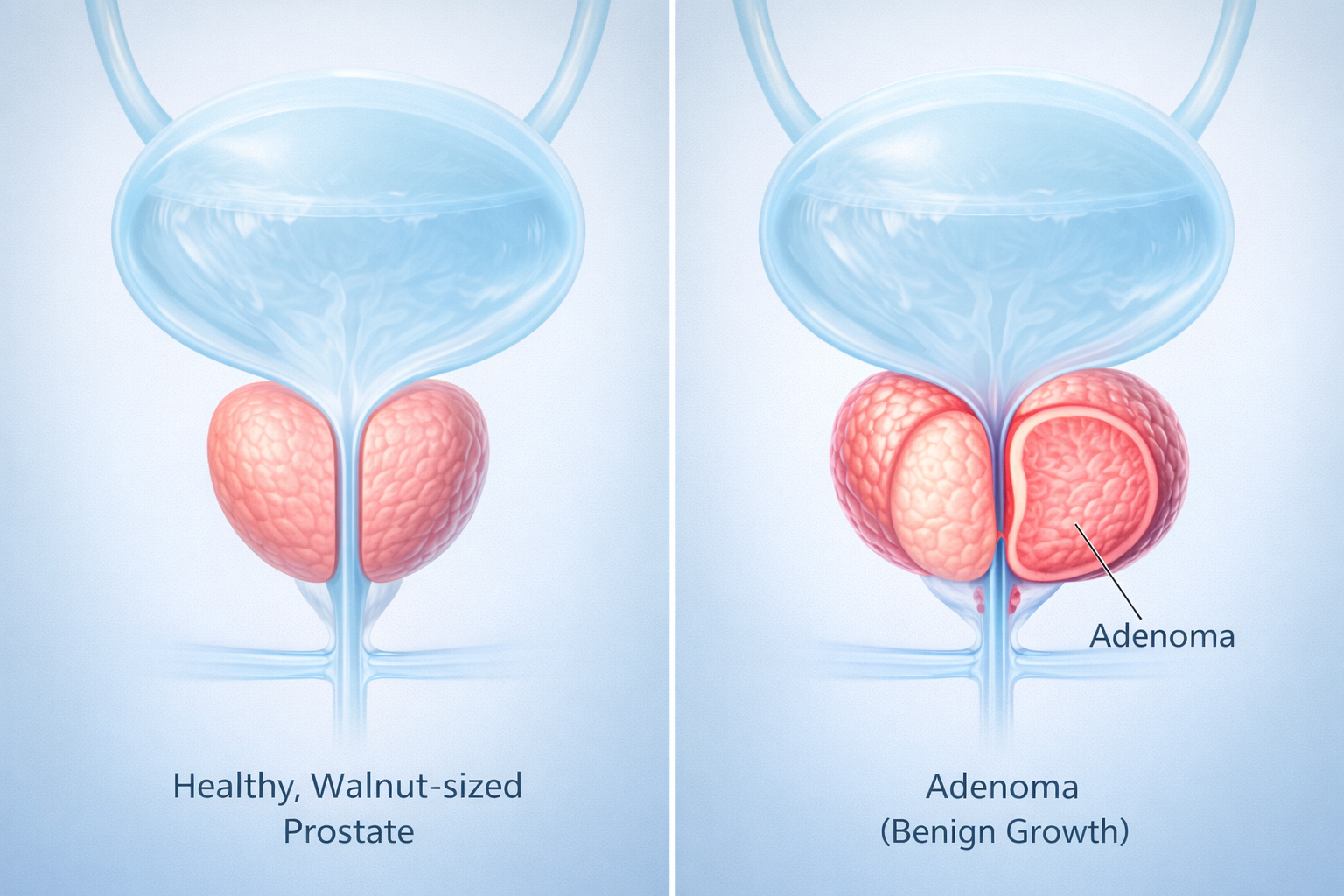
⚡ Quick Definition: What is a Prostate Adenoma?
A Prostate Adenoma is a benign (non-cancerous) tumor formed by the overgrowth of glandular tissue in the prostate. It is simply the medical term often used to describe the tissue growth responsible for BPH (Enlarged Prostate). It is NOT cancer.
If you have recently undergone an ultrasound or MRI and saw the term “Prostate Adenoma” on your report, it is natural to feel a spike of anxiety. The word “tumor” or “adenoma” sounds serious, and often, our minds jump straight to the worst-case scenario.
But here is the good news: A prostate adenoma is extremely common, and for the vast majority of men, it is a manageable part of aging, not a life-threatening crisis.
In this guide, we will break down exactly what a prostate adenoma is, how it differs from prostate cancer, and the best ways to manage it—both medically and naturally.
Prostate Adenoma vs. BPH: What’s the Difference?
You might be confused. Your doctor talks about BPH (Benign Prostatic Hyperplasia), but your paperwork says Adenoma. Are they different?
Practically speaking, they are the same condition.
- Adenoma: Refers to the specific nodules of tissue that are growing inside the gland. It describes the structure of the growth.
- BPH (Hyperplasia): Refers to the process of the prostate getting bigger overall.
Think of it this way: The “Adenoma” is the extra fruit growing on the tree, and “BPH” is the result—the tree becoming too heavy and large.
Is a Prostate Adenoma Dangerous?
The most important thing to know is that an adenoma is benign. It does not spread to other parts of the body like cancer does.
However, just because it isn’t cancer doesn’t mean it’s harmless. As the adenoma grows, it takes up space. Since the prostate wraps around your urethra (the tube you pee through), a growing adenoma acts like a clamp, squeezing the tube shut.
Common Symptoms of a Growing Adenoma:
- Hesitancy: Waiting a long time for the stream to start.
- Weak Stream: The flow starts and stops.
- Nocturia: Waking up 2, 3, or more times at night to urinate.
- Incomplete Emptying: Feeling like there is still liquid left in the bladder.
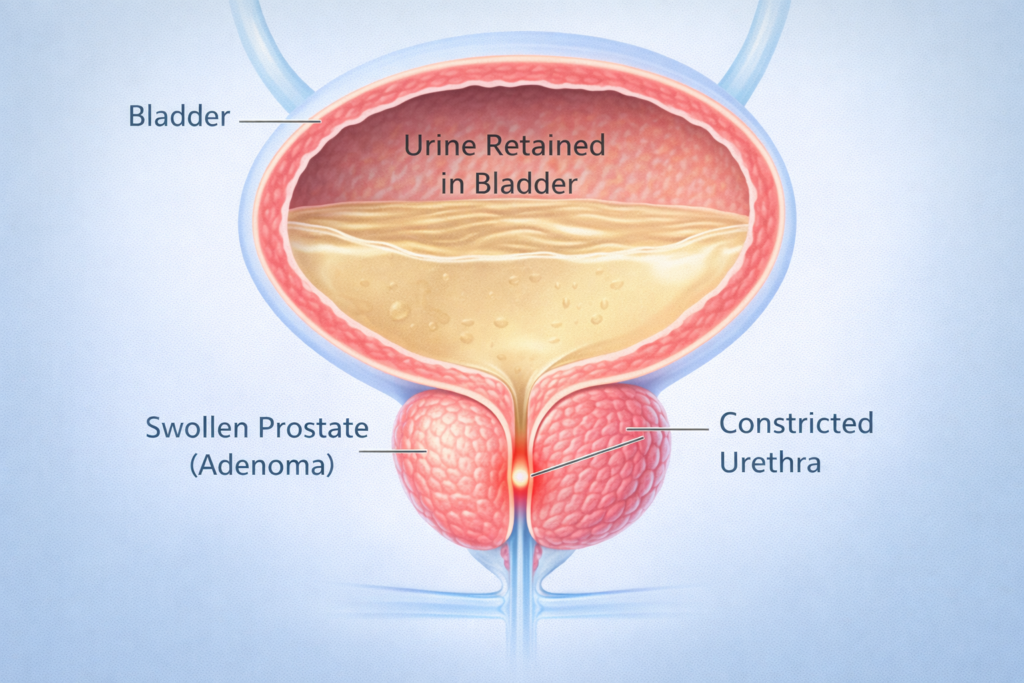
How is Prostate Adenoma Treated?
If your adenoma is small and symptoms are mild, doctors often recommend a strategy called “Watchful Waiting.” This means you don’t take harsh medication or do surgery yet; you just monitor it.
However, “waiting” doesn’t mean “doing nothing.” If you just wait, the adenoma typically continues to grow. This is the ideal time to make lifestyle changes to support your prostate health.
Medical Interventions
If the adenoma becomes too large and blocks urine flow completely, doctors may suggest:
- Alpha Blockers: Drugs to relax the muscles around the adenoma.
- TURP Surgery: A procedure to “shave away” the adenoma tissue.
- Laser Therapy: Using heat to vaporize the excess tissue.
🌱 Supporting Prostate Health Naturally
If you are in the “Watchful Waiting” phase, you might be looking for ways to maintain normal urinary function without immediately jumping to surgery.
Diet plays a huge role (eating more lycopene, reducing red meat), but many men also turn to targeted nutritional support.
This is where ProstaLite fits into your routine. It is not a cure for medical conditions, but a specialized blend of natural ingredients designed to support a healthy prostate size and normal urinary flow.
Ingredients like Saw Palmetto and Beta-Sitosterol are widely studied for their ability to support men dealing with the symptoms associated with prostate adenomas.
Want to support your body naturally?👉 Check out how ProstaLite ingredients work here.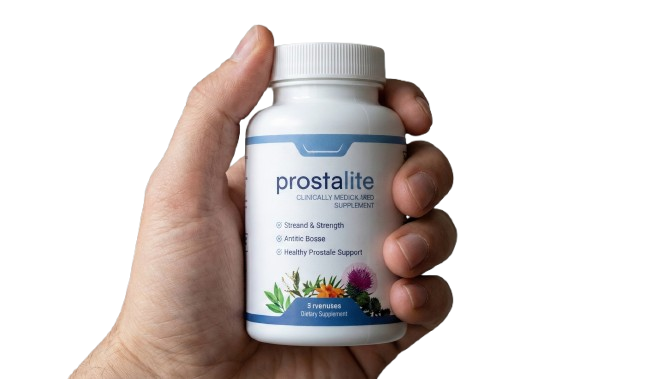

Frequently Asked Questions
Can a prostate adenoma turn into cancer?
No. An adenoma is benign tissue. It does not turn into a carcinoma (cancer). However, it is possible for a man to have both an adenoma (BPH) and prostate cancer at the same time in different parts of the gland.
How fast does a prostate adenoma grow?
Growth rates vary. For most men, it is a slow process that happens over many years. Regular check-ups with a urologist are essential to monitor the size.
Does drinking water help prostate adenoma?
Hydration is important, but drinking too much water right before bed can worsen symptoms like nocturia. It is best to spread fluid intake throughout the day and limit it in the evening.
Medical References & Sources
- “Benign Prostatic Hyperplasia (BPH) Guideline” – American Urological Association.
- “Prostate Enlargement (Benign Prostatic Hyperplasia)” – National Institute of Diabetes and Digestive and Kidney Diseases (NIDDK).
- “Adenoma of Prostate Overview” – ScienceDirect Topics.

“Abdullah is a dedicated health researcher specialized in urological wellness and prostate health. With years of experience in analyzing clinical studies, he provides evidence-based guidance to help men lead healthier lives.”
