
You’ve tried cutting out caffeine. You’ve tried the standard yoga poses. You might even be taking medication. Yet, the nightly trips to the bathroom continue, and that nagging feeling of pressure in your lower abdomen won’t go away.
For many men over 50, vigorous exercise is difficult. Knees ache, backs are stiff, and high-impact workouts can sometimes make prostate inflammation worse.
But what if the solution wasn’t about “working out,” but “working in”?
Enter Qigong for prostate health.
Pronounced “Chee-Gong,” this 4,000-year-old practice is often called “Chinese Yoga,” but it’s far gentler. It doesn’t require flexibility, sweat, or a gym membership. It focuses on one thing: Flow.
In this comprehensive guide, we will explore why traditional Chinese medicine (TCM) believes prostate problems are merely “stuck energy,” and how specific, slow-motion movements can open the floodgates of healing, reduce BPH symptoms, and restore your quality of life in 2026.
What is Qigong? (And Why Men Over 50 Need It)
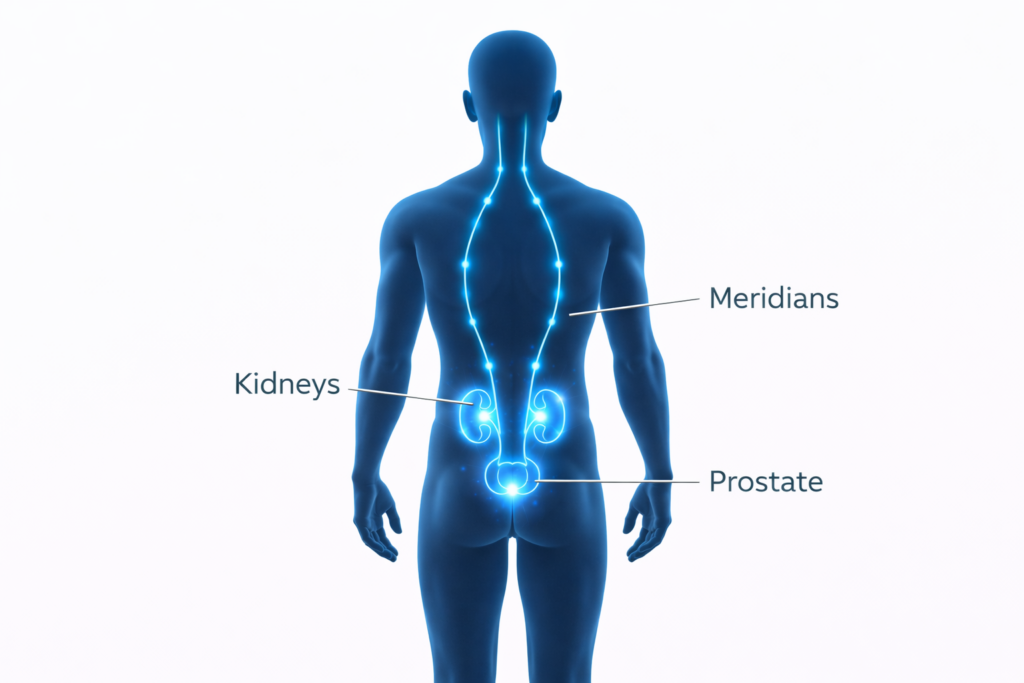
Qigong translates to “Energy Cultivation.” Unlike Western exercise which focuses on building muscle mass, Qigong focuses on moving blood and Qi (Life Force) through the body’s meridians.
Think of your body’s circulatory system like a garden hose. When you are young, the hose is wide and clear. As we age, stress, poor diet, and sedentary lifestyles put “kinks” in the hose. The water (blood/energy) stops flowing properly.
When this flow stops in the pelvic area, Western medicine calls it Benign Prostatic Hyperplasia (BPH) or inflammation. Chinese medicine simply calls it “Stagnation.”
The Qigong Solution: By using slow, rhythmic movements and deep breathing, you gently unkink the hose. This allows fresh, oxygenated blood to flush out toxins from the prostate gland naturally.
The Science of Stagnation: The Kidney-Prostate Link
If you ask a Western doctor about the prostate, they look at the gland. If you ask a Qigong master, they look at the Kidneys.
In TCM, the Kidneys are the “batteries” of the body. They govern sexual health, urinary function, and aging. When Kidney energy (Yang) is low, the prostate becomes cold and sluggish, leading to enlargement and frequent urination.
- Coldness: Poor circulation leads to tissue hardening.
- Dampness: Fluid retention (difficulty urinating).
- Stagnation: Pain and swelling.
Qigong exercises specifically target the Kidney meridian to “warm up” the engine and melt away this stagnation.
3 Ancient Movements to Shrink BPH Symptoms
You can do these exercises standing up, in your pajamas, in less than 10 minutes. No equipment is needed.
1. Kidney Warming (The Battery Charger)
This is the most fundamental move to boost energy in the pelvic bowl.
- Stance: Stand with feet shoulder-width apart. Knees slightly bent.
- Action: Rub your palms together vigorously until they feel hot.
- Movement: Place your warm palms on your lower back (over the kidneys). Rub up and down vigorously for 1-2 minutes until you feel heat penetrating your spine.
- Why it works: It physically increases blood flow to the adrenal glands and kidneys, which sit directly above the nerve pathways to the prostate.
2. The “Deer Walk” (Modified for Beginners)
The “Deer Exercise” is famous in Taoist circles for preserving male virility.
- Stance: Stand comfortably.
- Action: While keeping your hands on your lower back (Kidneys), begin to shift your weight slowly from one foot to the other.
- Focus: As you shift, imagine you are gently massaging the internal organs of your lower abdomen with your hips.
- Breathing: Inhale as you shift left, exhale as you shift right.
⚠️ Critical Insight: The “Internal vs. External” Trap
Qigong is incredibly powerful for moving blood flow from the outside. It clears the roads so traffic can move.
However, if the “car” (your prostate cells) is damaged by years of inflammation and hormonal imbalance (DHT), movement alone might take months to show results.
The Smart Strategy: Use Qigong to open the circulation, and use clinical-grade nutrients to repair the tissue from the inside. This “Pincer Attack” is what 90% of men miss.
👉 Click Here to Reveal the “Internal Qi” Formula (2026 Review)
3. Gathering the Heaven and Earth (The Flush)
This move helps calm the nervous system, which is crucial because stress tightens the pelvic floor muscles.
- Action: Inhale deeply as you sweep your arms out to the sides and up over your head.
- Visual: Imagine gathering fresh, clean energy.
- Exhale: Slowly push your palms down the center line of your body. Imagine you are pushing a plunger down a clogged pipe, clearing all tension out through your feet.
Is It Just Magic? What Science Says
You might be skeptical. Is this just placebo? The data suggests otherwise.
A study published in the Journal of Cancer Survivorship (referencing the efficacy of Tai Chi/Qigong) found that these gentle exercises significantly reduced fatigue and improved quality of life in prostate cancer survivors. Another study highlighted in ScienceDirect showed biobehavioral benefits, linking meditative movement to reduced systemic inflammation.
While Qigong is not a “cure” for cancer, it is a scientifically validated method for managing symptoms, reducing cortisol, and improving pelvic circulation.
Follow Along: 15-Minute Prostate Qigong Routine
Reading about movements is one thing; doing them is another. We have selected this specific routine because it is tailored for beginners and focuses heavily on the pelvic region.
Beyond Movement: The “Jing” Diet
In Qigong philosophy, you cannot build energy if you are eating “dead” food. To maximize the effect of your exercises, combine them with these tips:
- Eat “Qi” Foods: Fresh, organic vegetables like Asparagus (rich in Glutathione) and dark leafy greens.
- Avoid “Damp” Foods: Dairy, greasy fried foods, and excessive sugar create “sludge” in the body. See our guide on Dairy and Prostate Health.
- Limit Alcohol: While a little wine moves Qi, too much creates heat and inflammation. Read about Alcohol’s impact here.
Frequently Asked Questions
Can Qigong cure an enlarged prostate?
Qigong is not a cure-all, but it is an excellent complementary therapy. It helps reduce symptoms like urinary urgency and pain by improving blood flow and reducing stress. It works best when combined with proper nutrition and medical advice.
How often should I practice Qigong for results?
Consistency is key. Practicing for just 10-15 minutes every morning is more effective than doing an hour once a week. Most men report feeling a difference in energy levels within 2 weeks.
Is Qigong safe for men with back pain?
Yes, Qigong is generally very safe and low-impact. However, always listen to your body. If a movement hurts, stop or modify it. It is often safer than Yoga for those with severe back issues.
Final Thoughts: The Path of Least Resistance
Qigong for prostate health teaches us a valuable lesson: sometimes, forcing things makes them worse. By relaxing, breathing, and moving gently, we allow the body to heal itself.
Start with the “Kidney Warming” exercise tomorrow morning. Your prostate—and your peace of mind—will thank you.
Disclaimer: This article is for informational purposes only. Always consult your urologist before starting any new exercise routine, especially if you have a history of prostate cancer.

“Abdullah is a dedicated health researcher specialized in urological wellness and prostate health. With years of experience in analyzing clinical studies, he provides evidence-based guidance to help men lead healthier lives.”
