
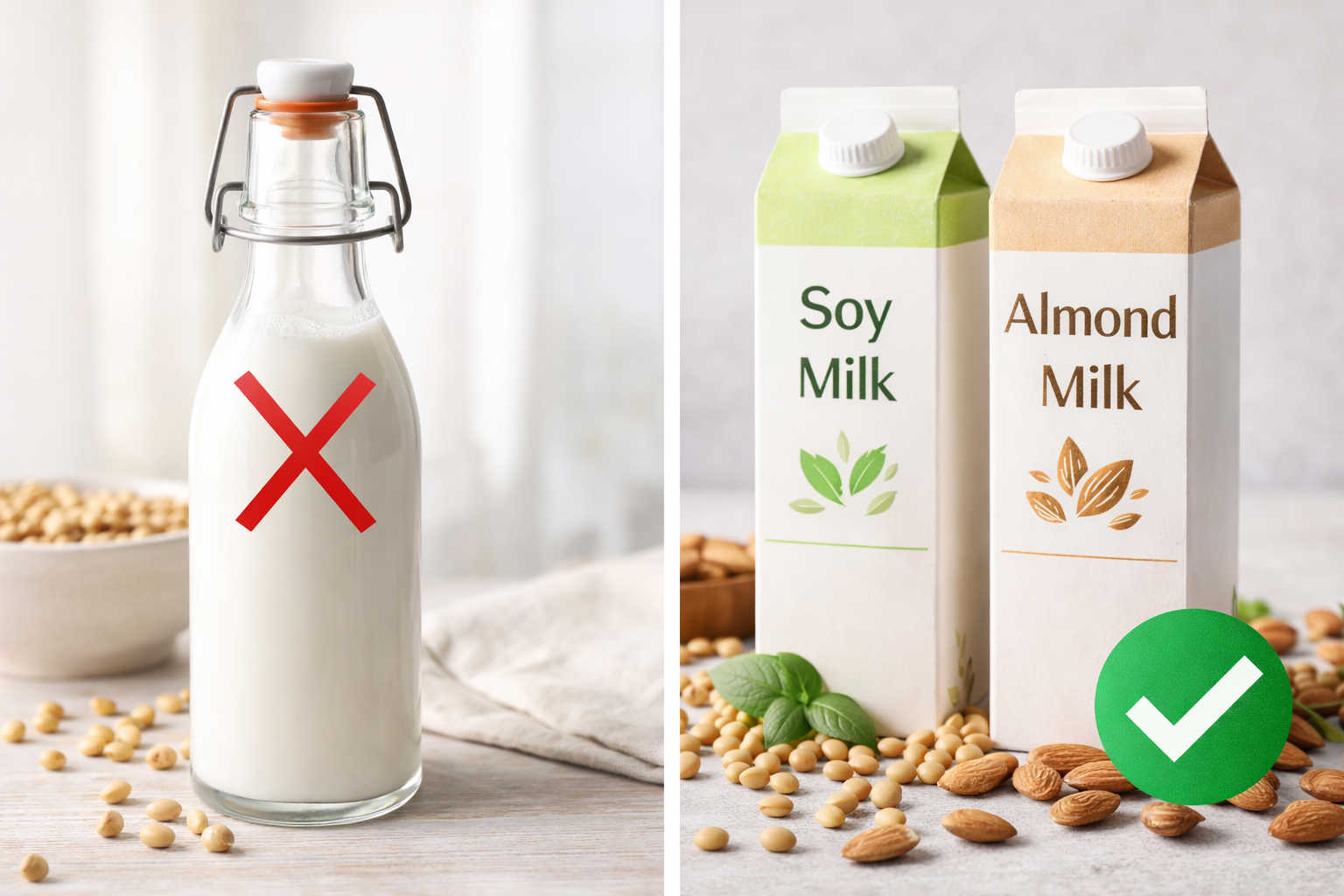
You are standing in the grocery aisle, confused. On one side, there is the traditional cow’s milk you grew up drinking. On the other, a growing army of plant-based alternatives: Soy, Almond, Oat, Rice, Hemp.
Your doctor told you to watch your diet for your prostate health. Your gym buddy told you soy will give you “man boobs.” The internet is full of conflicting advice.
So, what is the truth about Soy Milk and Prostate Health?
In this comprehensive, science-backed guide, we are going deep. We aren’t just skimming the surface; we are going to dissect the molecular effects of soy on the male body, compare it head-to-head with almond milk, and reveal why ditching dairy might be the single best decision for your BPH (Benign Prostatic Hyperplasia).
The “White Poison”: Why Cow’s Milk is Public Enemy #1
Before we champion plant milk, we must understand why regular milk is problematic for men over 50. It’s not just about lactose intolerance; it’s about hormones.
The IGF-1 Connection
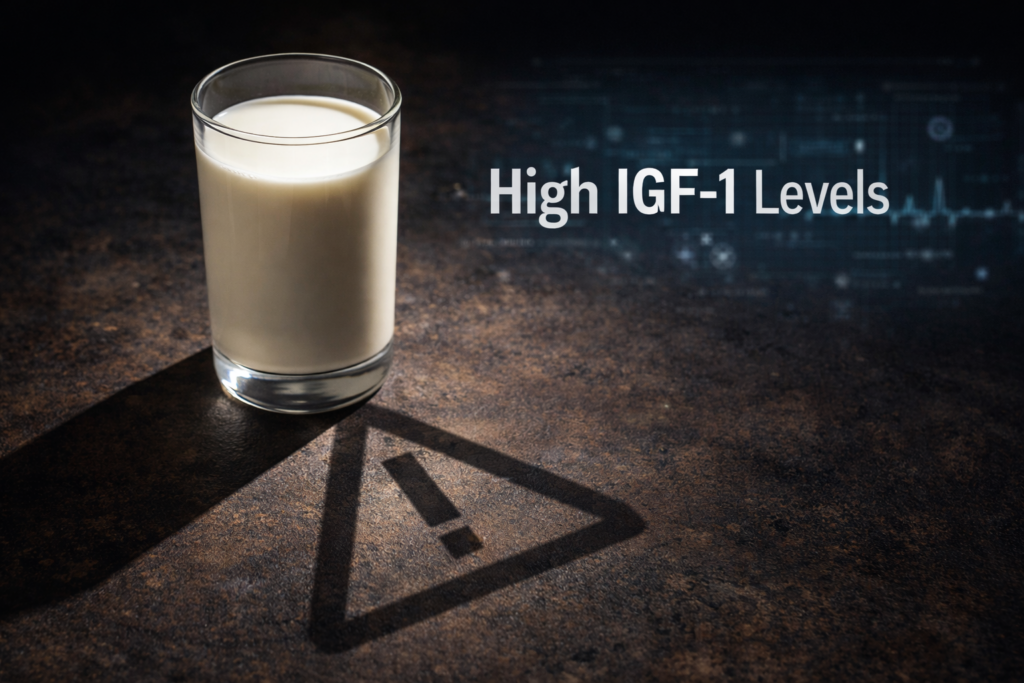
Cow’s milk is designed by nature to turn a 60-pound calf into a 1,500-pound cow. It is packed with growth hormones, specifically Insulin-like Growth Factor 1 (IGF-1).
In adult men, high levels of IGF-1 have been strongly linked to:
- Accelerated growth of prostate cells (worsening BPH).
- Increased risk of prostate cancer progression.
A study published in the Journal of Nutrition found that men with the highest intake of dairy had a significantly higher risk of prostate issues compared to those who consumed little to no dairy.
Key Takeaway: If you are trying to shrink your prostate naturally, cutting out the growth hormones found in dairy is non-negotiable.
Soy Milk: Friend or Foe? (The Science of Phytoestrogens)
This is the most controversial part. Let’s tackle the “feminization” myth.
Understanding Isoflavones
Soy beans are rich in compounds called Isoflavones (specifically Genistein and Daidzein). These are “Phytoestrogens” (plant estrogens). Because they structurally resemble human estrogen, people assume they have the same effect. This is scientifically incorrect.
How Soy Actually Protects the Prostate
Phytoestrogens are “Selective Estrogen Receptor Modulators” (SERMs). In the prostate, they actually bind to estrogen receptors but block the stronger, more damaging effects of your body’s own hormones.
Think of soy isoflavones as a “shield.” They occupy the parking spot so the bad guys can’t park there.
What the Studies Say
A meta-analysis involving over 250,000 men showed that soy consumption was associated with a 30% reduction in prostate cancer risk. In Asian countries where soy intake is high (like Japan), prostate cancer rates are historically much lower than in the West.
However, quality matters. We recommend organic, non-GMO soy milk. Avoid highly processed “soy protein isolate” found in cheap protein bars.
Is Almond Milk Good for Prostate? (The Safe Bet)
If you are still hesitant about soy, or simply don’t like the taste, Almond Milk is an incredible alternative. It is rapidly becoming the #1 choice for men’s health.
The Vitamin E Advantage
Almonds are one of the best natural sources of Vitamin E (Alpha-Tocopherol). This powerful antioxidant protects cell membranes from oxidative stress. Since inflammation is a root cause of BPH, Vitamin E acts as a cooling agent for your prostate.
Choosing the Right Almond Milk
Not all almond milks are created equal. Many store brands are essentially sugar water with 2% almonds. To get the benefits:
- Go Unsweetened: Sugar spikes insulin, which triggers inflammation. Always buy “Unsweetened.”
- Check for Carrageenan: This thickening agent can cause gut inflammation. Look for “Carrageenan-free” on the label.
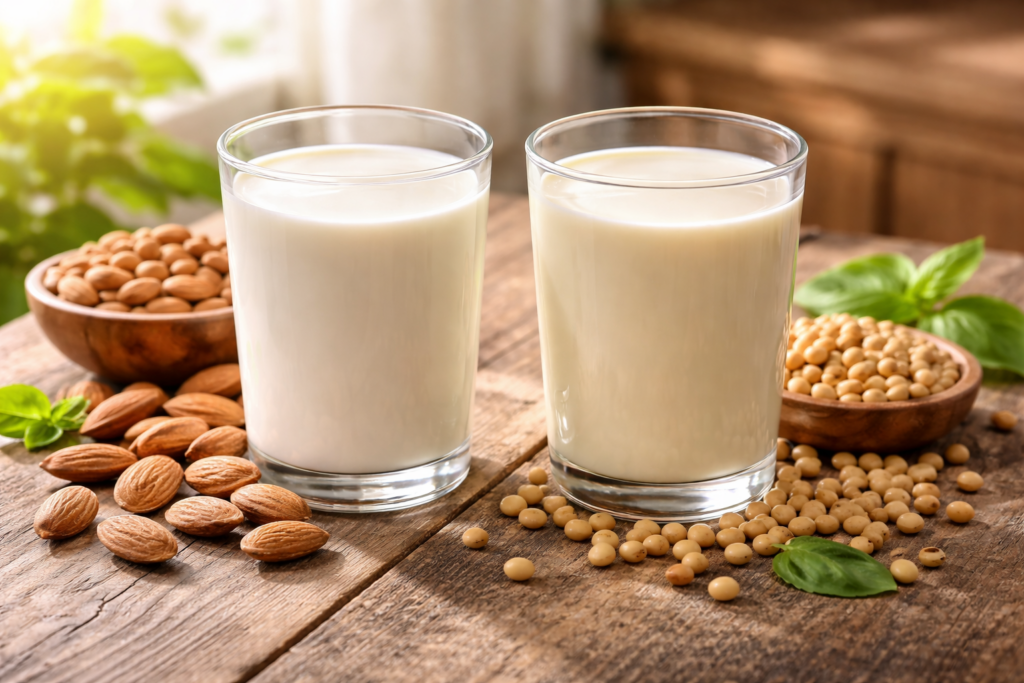
The Ultimate Milk Showdown: Dairy vs. Soy vs. Almond
Let’s break it down simply. Which carton should you grab?
| Nutrient / Factor | Cow’s Milk (Whole) | Soy Milk (Unsweetened) | Almond Milk (Unsweetened) |
|---|---|---|---|
| Prostate Safety | 🔴 High Risk (IGF-1) | 🟢 Protective (Isoflavones) | 🟢 Excellent (Anti-inflammatory) |
| Protein Content | 8g per cup | 7g per cup | 1g per cup |
| Hormone Impact | Contains mammalian estrogens | Contains plant Phytoestrogens (Weak) | Neutral |
| Calories | 150 cal | 80 cal | 30 cal (Great for weight loss) |
| Verdict | ❌ Avoid | ✅ Good (In moderation) | ✅ Best for Daily Use |
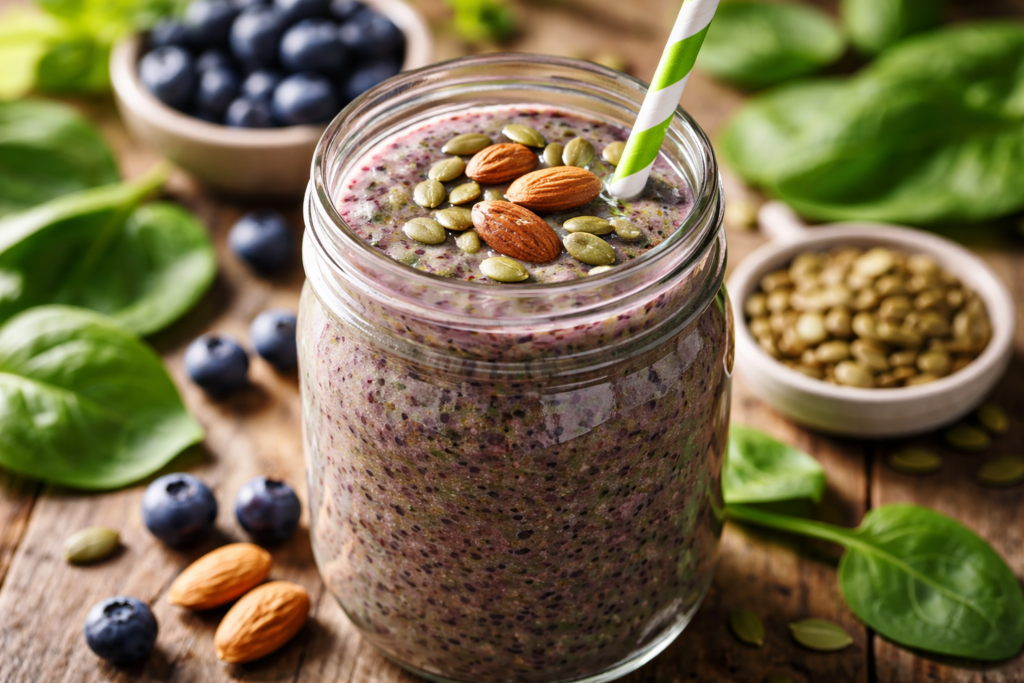
Recipe: The “Prostate Power” Morning Smoothie
Want to combine the best ingredients into one delicious drink? Try this every morning to fuel your body and protect your gland.
Ingredients:
- 1 cup Unsweetened Almond Milk (Base).
- 1 handful Spinach (Magnesium).
- 1/2 cup Frozen Blueberries (Antioxidants).
- 1 tbsp Pumpkin Seeds (Zinc – crucial for prostate).
- 1 scoop Plant-Based Protein Powder (Optional).
Instructions: Blend on high for 30 seconds. Drink immediately. This smoothie is packed with Zinc, Vitamin E, and antioxidants, without a drop of dairy.
🌱 Looking for more dietary tips?
Diet is just one piece of the puzzle. Check out our other popular guides:
- Why Dark Chocolate is a Prostate Superfood
- Asparagus: The Glutathione Booster
- The Truth About BPH Medications
When Diet Isn’t Enough: The “ProstaLite” Protocol
Switching to almond or soy milk is a fantastic lifestyle change. It stops you from “feeding the fire” with dairy. But does it put out the fire that’s already burning?
If you are already waking up 3-4 times a night, you need something stronger than just milk.
This is where targeted supplementation comes in. While you can get small amounts of Beta-Sitosterol from soy, you would need to drink gallons to get a therapeutic dose.
ProstaLite is designed to bridge this gap. It extracts the potent active compounds found in these plants and delivers them in a concentrated form.
Think of it this way:
- Almond Milk: Stops adding fuel to the fire.
- ProstaLite: Pours water on the flames.
By combining a dairy-free diet with ProstaLite, you attack BPH from two angles: Prevention and Active Shrinking.
👉 Check ProstaLite Availability & Pricing
Frequently Asked Questions
Does soy milk lower testosterone?
No. Comprehensive reviews of clinical studies have found that neither soy foods nor isoflavone supplements alter measures of bioavailable testosterone concentrations in men.
Is oat milk good for enlarged prostate?
Oat milk is generally safe and better than cow’s milk. However, it is often higher in carbohydrates and sugar than almond or soy milk. If you are watching your weight or blood sugar (which impacts prostate health), almond milk is a superior choice.
What is the worst milk for prostate health?
Whole cow’s milk is considered the worst due to its high content of saturated fats and IGF-1 hormones, both of which are linked to increased prostate inflammation and cancer risk.
Scientific References
- “Dairy products, calcium, and prostate cancer risk: a systematic review and meta-analysis of cohort studies” – American Journal of Clinical Nutrition.
- “Soy consumption and prostate cancer risk in men: a revisit of a meta-analysis” – PubMed.
- “Phytoestrogens and their health effects” – National Institutes of Health (NIH).

“Abdullah is a dedicated health researcher specialized in urological wellness and prostate health. With years of experience in analyzing clinical studies, he provides evidence-based guidance to help men lead healthier lives.”
